Posts by fang:

Hitachi Rail to manufacture rolling stock for Seibu Railway”s new Fine Dining Train

TOKYO, Japan, Mar 26, 2026 - (JCN Newswire via SeaPRwire.com) - Hitachi Rail announced that it will manufacture rolling stock for a new restaurant train, Fine Dining Train “vies,” in which SEIBU RAILWAY Co.,Ltd. is participating. The train is scheduled to begin operations in March 2028, and the train name and logo design have now been finalized.Realising a premium travel experience through rolling stock manufacturingDrawing on the technologies and expertise it has cultivated through the design and manufacture of railway rolling stock, Hitachi will be responsible for manufacturing the vehicles for this train. Fine Dining Train “vies” builds upon and further develops the concept established by “ Fifty Two Seats of Happiness ,” Seibu Railway’s full - course restaurant train that has been in operation since 2016, with the aim of delivering a more refined and exclusive space and dining experience. The train will be newly designed and manufactured based on the Seibu Railway flagship limited express train “Laview,” which was manufactured by Hitachi and debuted in 2019. Hitachi will apply to this project the technical know - how it has gained through the development and manufacture of Laview, including the creation of open and spacious interiors enabled by large windows, design philosophies that harmonize with surrounding landscapes, and technologies that realize a comfortable travel environment. In addition, Hitachi’s contribution extends beyond vehicle manufacturing alone. By leveraging its expertise in control and system technologies that support safe, stable operation and passenger comfort, Hitachi will help realize a travel experience in which dining and space are integrated at a high level. Through the creation of a premium travel environment that ensures safety and comfort while supporting “ quality time shared with someone special ,” Hitachi will continue to deliver new value.Key informationTrain Name: Fine Dining Train “vies”Planned Start of Operations: March 2028Rolling Stock Manufacturer: Hitachi RailNaming Development: Toshiyuki Konishi (POOL inc.)Logo Design: Hideyuki Tanno (POOL DESIGN inc.)Naming conceptFine Dining Train “vies” “Vie” means “life” or “living” in French. The name reflects respect for nature —an important value long cherished in Japan, where food is regarded as receiving life —while expressing the desire to enrich the lives of each passenger. The plural form “vies” was chosen to represent this idea. When read in reverse, “vies” reads as “Seibu,” creating a subtle narrative connection. Together with the subtitle “Fine Dining Train,” the name expresses a special dining stage where multiple lives meet and resonate through a refined culinary experience.Logo design conceptThe organic curve of the letter “s” and the underline extending from it represent the train’s distinctive form. The word “vie,” meaning “life,” “living,” and “vitality” in French, is incorporated into the design, symbolizing both rich cuisine and the passengers themselves. Rather than speed or efficiency, the logo embodies a leisurely and indulgent experience, creating a space that gently envelops its guests. The underline extending from right to left subtly alludes to the reverse reading of “vies” as “Seibu.”Seibu Railway’s restaurant trainHitachi has supported Seibu Railway’s restaurant train initiative through close collaboration with the company, including “Fifty Two Seats of Happiness ,” which has been in operation as a full - service restaurant train since April 17, 2016, following the refurbishment of Seibu Railway’s 4000 series rolling stock. Designed by architect Kengo Kuma , the exterior and interior of the train are inspired by Chichibu , one of the region’s most prominent tourist destinations. The exterior dynamically incorporates motifs of the Arakawa River flowing through the natural landscape, while the interior features traditional Chichibu Meisen textiles and l ocally sourced Nishikawa timber . The train operates mainly on weekends and holidays between Ikebukuro / Seibu - Shinjuku and Seibu - Chichibu stations, and is scheduled to mark its 10th anniversary in April 2026 .Seibu Railway 001 series limited express train “Laview”Hitachi manufactured the Seibu Railway 001 series limited express train “Laview,” positioned as Seibu Railway’s flagship train for the future, which debuted on March 16, 2019 . The name “Laview” combines the concepts of “L” for a luxurious living -like space, “a” for arrow -like speed, and “view” for the expansive scenery visible through its large windows . The train embodies the aspiration to provide passengers with an enjoyable limited express journey that gently blends into both urban and natural landscapes.About Hitachi RailHitachi Rail is committed to driving the transition to sustainable mobility and has a clear focus on partnering with customers to rethink mobility. Its mission is to help every passenger, customer, and community enjoy the benefits of more connected, smooth , and sustainable transportation.With a turnover of more than €7 billion and 24,000 employees in more than 50 countries, Hitachi Rail is a reliable partner for the world's best transport companies. The company's presence is global, but the company is local, with success based on developing local talent and investing in people and communities. Its international expertise and experience covers every part of urban ecosystems, main lines and freight railways, from high - quality production and maintenance of rolling stock to digital signalling, payment systems and smart operations. Hitachi Rail, famous for Japan's iconic high -speed train, leverages the digital and artificial intelligence expertise of Hitachi Group companies to accelerate innovation and develop new technologies.For more information, visit the hitachirail.comAbout Hitachi, Ltd.Through its Social Innovation Business (SIB) that brings together IT, OT (Operational Technology) and products, Hitachi contributes to a harmonized society where the environment, wellbeing, and economic growth are in balance. Hitachi operates globally in four sectors – Digital Systems & Services, Energy, Mobility, and Connective Industries – and the Strategic SIB Business Unit for new growth businesses. With Lumada at its core, Hitachi generates value from integrating data, technology and domain knowledge to solve customer and social challenges. Revenues for FY 2024 (ended March 31, 2025) totaled 9,783.3 billion yen, with 618 consolidated subsidiaries and approximately 280,000 employees worldwide. Visit us at www.hitachi.com. Copyright 2026 JCN Newswire via SeaPRwire.com. All rights reserved. www.jcnnewswire.com

Esports Nations Cup Names Partners in Over 100 Countries

(AsiaGameHub) -   The Esports Foundation has appointed National Team Partners across over 100 countries and territories for the 2026 Esports Nations Cup. The tournament will make its debut in Riyadh between November 2 and November 29, 2026, with a format centered on national teams instead of club competitions. Good to Know Over 630 applications were submitted from 150 countries and territories. This event will take place every two years and run concurrently with the annual Esports World Cup. Nations without a designated partner will receive support through regional frameworks. Esports Nations Cup Establishes a National Team Framework A core pillar of this initiative is local autonomy. Rather than imposing a single standardized structure across all markets, the Esports Foundation noted that partners will oversee team formation, mobilize local communities, and establish the necessary systems for participation and sustained growth. This sets the project apart from traditional club-focused esports circuits. National teams will originate from local governing bodies, clubs, or combined alliances, tailored to the existing operational landscape of each market. In some regions, this will involve established groups such as the Korea Esports Association and the Saudi Esports Federation. In other areas, it will mean club-led coalitions in Brazil and the United States, or hybrid public-private models in Germany, Canada, and the United Arab Emirates. “The Esports Nations Cup brings something esports has never seen before: a global national team system at an unmatched scale,” said Ralf Reichert, CEO of the Esports Foundation. “The feedback we received from across the globe shows that communities are ready for this next phase. Together with our partners, we are building the frameworks that will allow players to represent their nations and compete on esports’ biggest stage. With over 100 nations now part of this system, the Esports Nations Cup has moved from concept to reality — cementing national esports as a lasting part of the global competitive gaming landscape.” The Esports Foundation explained that the partner roster mixes long-established esports groups with emerging forces driving competitive gaming forward. In markets including Malaysia, Turkey, and Thailand, partners include federations closely tied to grassroots gaming communities. In Indonesia and Mongolia, development support will help shape national team representation for the global stage. For fans, the most notable change may revolve around national identity. National teams add a layer that club-based esports does not always offer. South Korea can lean on its long-standing record in League of Legends, Brazil brings a robust Counter-Strike culture, Japan has deep roots in fighting game esports, and parts of Southeast Asia remain leading hubs for mobile gaming competition. India was also highlighted for its chess esports scene. Riyadh will host the inaugural edition in November 2026, after which the tournament will shift to a rotating host city model. This biennial setup is intended to complement the annual Esports World Cup and provide players and industry stakeholders with a more consistent pathway for national team investment. This article is provided by a third-party. AsiaGameHub (https://asiagamehub.com/) makes no warranties regarding its content. AsiaGameHub delivers targeted distribution for iGaming, Casino, and eSports, connecting 3,000+ premium Asian media outlets and 80,000+ specialized influencers across ASEAN.

DigiPlus Participates in Discussions on Philippines Gaming Overhaul

(AsiaGameHub) -   DigiPlus Interactive Corp has expressed its support for a comprehensive regulatory revamp of the Philippine online gaming industry as government legislators and Pagcor increase their supervision of the sector. Good to Know DigiPlus stated it is participating in a technical working group that is crafting new laws. The firm anticipates more stringent regulations, rather than a complete prohibition of online gaming. DigiPlus also mentioned that prediction markets are in preliminary discussions with Pagcor. DigiPlus Backs Tighter Rules as Philippines Gaming Debate Builds Although some market speculation has centered on the possibility of the Philippines shutting down certain online gaming activities, DigiPlus anticipates an alternative result. President Andy Tsui confirmed that enhanced regulation is a primary focus, but he also stated the company is confident that an outright ban is not probable. “We are involved in the working group and are actively contributing to those conversations,” Mr. Tsui remarked. “We are very confident that a total ban will not occur, and instead, the sector will face stricter regulations,” he continued. “This will be beneficial for building a sustainable, long-term industry.”DigiPlus endorsed a "new, all-encompassing regulatory framework" designed to elevate standards throughout the industry. The company reported that the technical group's efforts are concentrated on bolstering consumer safeguards, imposing stricter controls on payment channels, and increasing restrictions on marketing. Chairman Eusebio Tanco described the initiative as a method to maintain licensed operators in the market while simultaneously elevating compliance benchmarks. “As a licensed and prominent online gaming operator, we consistently welcome cooperation and active engagement in dialogues with the Philippine government to reach our mutual objective of improving industry standards.” He further stated: “By strengthening a market that permits only those operators who follow the highest compliance standards, we guarantee that the advantages of our industry—from employment generation to crucial tax income—are maintained for the benefit of the Filipino people.”DigiPlus currently operates multiple gaming brands in the Philippines, such as BingoPlus, ArenaPlus, and GameZone. Concurrently, the company highlighted its implementation of player protection measures, including a surety bond program and expanded over-the-counter payment choices via Bayad and Pay&Go. Prediction markets represent another topic being explored. Mr. Tsui mentioned that DigiPlus has initiated preliminary talks with Pagcor concerning this segment, although the work is in its nascent stages. “We are still in the testing phase… but this type of offering has not yet been launched in the Philippines,” the DigiPlus president observed. He added: “We aspire for it to become an additional service we can introduce in the future.” Legal uncertainties persist regarding this product category. A legal analysis by attorney Marie Antonette Quiogue indicated that Philippine law classifies wagering on outcomes that involve any element of chance as gambling, which implies that any local launch would require official legal approval and a license from Pagcor. This article is provided by a third-party. AsiaGameHub (https://asiagamehub.com/) makes no warranties regarding its content. AsiaGameHub delivers targeted distribution for iGaming, Casino, and eSports, connecting 3,000+ premium Asian media outlets and 80,000+ specialized influencers across ASEAN.

Tether Engages Big Four Accounting Firm for USDT Audit

(AsiaGameHub) -   Tether announced it has engaged a Big Four accounting firm to conduct an independent financial audit related to USDT. The assessment is scheduled to encompass reserve support, financial management, reporting, and broader operations associated with the stablecoin business. Good to Know Tether stated that USDT holds a market value exceeding $184 billion. The firm noted that over 550 million users globally depend on the stablecoin. The audit will evaluate digital assets, conventional reserves, and tokenized liabilities. Instead of restricting the review to cash support alone, Tether indicated the audit will assess a wide range of reserves and systems connected to USDT. This includes digital assets, traditional reserve holdings, tokenized liabilities, internal processes, financial reporting, and general operations. The company characterized the process as among the largest inaugural audits in financial markets. Given USDT's size, the scope is significant. Tether reported that the stablecoin currently has a market capitalization surpassing $184 billion and serves over 550 million users globally. For years, the quality of reserves and transparency have been key concerns regarding stablecoins. Against this background, Tether is positioning the audit as a direct evaluation of how its systems perform under external scrutiny by one of the world's largest accounting networks.Paolo Ardoino said: “Tether’s mission has always been to establish trust through actions, not just words. Trust is fostered when institutions are ready to fully subject themselves to examination. This audit reflects years of effort to enhance our systems, enabling Tether to meet the highest standards used in global finance. For the hundreds of millions of individuals and businesses that depend on USDT daily, this audit is more than a compliance task; it is about accountability, robustness, and confidence in the infrastructure they rely on.” This article is provided by a third-party. AsiaGameHub (https://asiagamehub.com/) makes no warranties regarding its content. AsiaGameHub delivers targeted distribution for iGaming, Casino, and eSports, connecting 3,000+ premium Asian media outlets and 80,000+ specialized influencers across ASEAN.

New Jersey Governor Calls for Legislative Vote on Atlantic City Casino Smoking

(AsiaGameHub) -   New Jersey Gov. Mikie Sherrill wants Atlantic City casino smoking regulations resolved by the Legislature, rather than being left to the courts. Her remarks draw fresh focus to two bills that would either eliminate indoor smoking or allow it to continue with stricter restrictions. Good to Know One bill would prohibit smoking throughout Atlantic City casino floors. Another would permit smoking solely in enclosed, individually ventilated spaces. Casino workers continue to be divided over jobs, health, and the long-term impact on revenue. Casino Smoking Fight Returns to New Jersey Legislature Legal proceedings are ongoing, but Sherrill stated that lawmakers still must take action. In an interview with The Press of Atlantic City, she noted the issue belongs in the legislative process and that hearings are necessary to balance worker health against economic risk. Per current regulations, casinos may permit smoking on up to 25% of the gaming floor. However, smoke doesn’t remain confined and can waft into nonsmoking areas. Two bills are back under consideration. S212 would fully ban smoking in Atlantic City casinos. S698, sponsored by Sens. John Burzichelli and Michael Testa, would retain smoking but restrict it to enclosed, separately ventilated areas engineered to prevent air from flowing into nonsmoking spaces. This bill would also prohibit managers from mandating employees to work in smoking sections and establish a 15-foot buffer zone from live-dealer table games.Sherrill stated: “There’s ongoing litigation, but they truly need legislation,” She also mentioned she intends to discuss the timing of long-delayed proposals with legislative leaders. Pressure has been mounting for years. Casino workers have spent approximately five years demonstrating and lobbying for change, and ban supporters claim they have support from around two-thirds of the Legislature. Nevertheless, bills have repeatedly gotten stuck. One measure passed a Senate committee over two years ago but expired when the legislative session concluded. The debate among workers has split into two camps. CEASE has advocated for a complete ban, asserting that secondhand smoke poses long-term health risks to casino employees. Unite Here Local 54 has taken the opposing stance, cautioning that a ban could reduce revenue, lead to job losses, and even put some casino operations at risk. Atlantic City casino operators have echoed these concerns. Pete Naccarelli, a dealer at Borgata Hotel Casino & Spa and a CEASE representative, expressed approval of the governor’s remarks. He stated:“We’ve lost far too many colleagues because of the Legislature’s inaction over the past 20 years. “No worker wants to inhale toxins for eight hours a day. With majority backing in both chambers, we implore the Legislature to heed the governor’s call for action and at last close the two-decade-old casino smoking loophole before more of us perish.” Sherrill also highlighted external pressures on Atlantic City. She noted that three planned casinos in New York City are anticipated to impact customer traffic and revenue, so any decision must take into account jobs and the local economy alongside worker safety. Ban supporters dispute the claim that smoke-free casinos inevitably lose business. They cite studies they say demonstrate smoking bans no longer ensure revenue drops. Meanwhile, workers advocating for a ban have also turned to state court, creating a parallel process as legislation remains unresolved. Public health trends add another dimension to the debate. Data from the Centers for Disease Control and Prevention’s National Health Interview Study, cited by advocates, revealed that 9.9% of U.S. adults reported smoking cigarettes in 2024, a decrease from 20.1% roughly 20 years prior. FAQ What did Mikie Sherrill state about casino smoking? She said the issue should be addressed via legislation instead of being left to the courts.What would S212 accomplish? S212 would prohibit smoking in Atlantic City casinos. What would S698 do? S698 would permit smoking only in enclosed, separately ventilated spaces with additional worker safeguards. Why are workers split? Some workers want a complete ban for health purposes, while others are concerned about revenue losses, job cuts, and potential casino shutdowns. What is the existing smoking regulation for Atlantic City casinos? Smoking is permitted on up to 25% of casino floor space, though smoke can spread beyond those areas. What external factor did Sherrill reference? She highlighted three planned casinos in New York City as a competitive challenge to Atlantic City. This article is provided by a third-party. AsiaGameHub (https://asiagamehub.com/) makes no warranties regarding its content. AsiaGameHub delivers targeted distribution for iGaming, Casino, and eSports, connecting 3,000+ premium Asian media outlets and 80,000+ specialized influencers across ASEAN.

India Blocks Another 300 Illegal Betting Sites

(AsiaGameHub) -   India has blocked around 300 additional illegal betting and gambling websites and apps as officials continue to tighten enforcement of online gaming regulations. Good to Know Authorities stated that the total number of blocked sites and apps has now reached approximately 8,400. Targeted platforms included sports betting sites, offshore casinos, betting exchanges, satta, matka, and real-money gaming apps. Current legislation prohibits online money games while still making room for esports and online social gaming. A new round of enforcement in India has taken down roughly 300 illegal betting and gambling platforms, expanding on a far larger national blocking campaign already in operation. Officials noted that many operators were reaching users through mobile apps and mirror sites while operating without authorization. Rather than focusing on a single market segment, authorities adopted a broad approach. The latest crackdown covered offshore casino sites offering games like slots and roulette, online sports betting platforms, peer-to-peer betting exchanges, and satta and matka networks. Real-money card and casino gaming apps were also part of the sweep. Authorities report that around 8,400 illegal gambling and betting sites and applications have been blocked so far. The latest action aligns with a broader enforcement push that accelerated after the Online Gaming Act was passed last year.Under this law, India imposed a sweeping ban on online money games. Games of chance are restricted, but so are games of skill and hybrid formats when money is involved. In practice, regulators are not distinguishing significantly between different formats if cash wagering is part of the activity. The regulations extend beyond the games themselves. Advertising, promotion, and facilitation are prohibited, and financial channels linked to the platforms face restrictions as well. Banks and payment systems are barred from processing related payments, giving regulators another avenue to pressure illegal operators out of the market. Meanwhile, the policy framework retains space for sectors the government aims to support. Esports and online social gaming remain part of this focus, with officials emphasizing innovation and growth in these categories over money-based gambling products. This article is provided by a third-party. AsiaGameHub (https://asiagamehub.com/) makes no warranties regarding its content. AsiaGameHub delivers targeted distribution for iGaming, Casino, and eSports, connecting 3,000+ premium Asian media outlets and 80,000+ specialized influencers across ASEAN.

The NBA Commences the Formal Bidding Stage for Las Vegas and Seattle

(AsiaGameHub) -   The NBA has initiated the official process for potential teams in Las Vegas and Seattle, following owners' approval of a market review on Wednesday. Key Details All 30 owners cast affirmative votes, despite only 23 being required. Individual franchises are estimated to fetch between $7 billion and $10 billion. This vote marks the commencement of the process; however, no team has been granted at this stage. NBA Starts Formal Expansion Review Discussions spanning several years have now transitioned into an official procedure. The league announced that PJT Partners will provide counsel on market viability, potential ownership consortia, proposed arena facilities, and the broader economic impact of expansion. “Today’s vote reflects our Board’s interest in exploring potential expansion to Las Vegas and Seattle – two markets with a long history of support for NBA basketball,” stated NBA Commissioner Adam Silver. “We look forward to taking this next step and engaging with interested parties.” Financial considerations are central to this initiative. Initial projections estimate each new franchise's value at $7 billion to $10 billion, with both cities anticipated to be among the league's highest-revenue markets. This prospect seems to have alleviated worries regarding the distribution of shared revenue among 32 teams rather than 30.Las Vegas previously encountered opposition due to Nevada being the sole state permitting legal sports betting. This situation evolved following the repeal of PASPA in 2018, with legal wagering now permissible in over three dozen states. Significant interest is anticipated for Las Vegas. Nevada Governor Joe Lombardo has reportedly engaged in discussions with Silver and also conferred with Magic Johnson regarding potential ownership, as per the Las Vegas Review-Journal. “I’m very excited to see the NBA advance this process toward a Las Vegas expansion team,” Lombardo remarked in a statement. “Today’s vote by the NBA Board of Governors is a testament to the incredible growth we’re seeing in Southern Nevada and our state’s business-friendly environment.” Additional potential bidders encompass Bill Foley and prominent ownership entities like Fenway Sports Group, Kroenke Sports & Entertainment, and Harris Blitzer Sports & Entertainment. Recent franchise transactions further elucidate the valuation prospects, with the Los Angeles Lakers achieving a $10 billion valuation and the Boston Celtics selling for $6.1 billion in 2025. This article is provided by a third-party. AsiaGameHub (https://asiagamehub.com/) makes no warranties regarding its content. AsiaGameHub delivers targeted distribution for iGaming, Casino, and eSports, connecting 3,000+ premium Asian media outlets and 80,000+ specialized influencers across ASEAN.

Isle of Man Considers Fines for Gambling Executives in AML Cases

(AsiaGameHub) -   The Isle of Man Gambling Supervision Commission has launched a consultation on proposed legislation that would enable regulators to impose fines on senior gambling industry personnel for anti-money laundering shortcomings. The measure increases scrutiny on individuals rather than solely on licensed operators. Good to Know The consultation period ends on May 25. Potential sanctions may apply to directors, compliance officers, and other senior staff members. A recent enforcement action against Shelgeyr Limited has brought compliance deficiencies back into the spotlight. Isle of Man Considers Individual AML Penalties Proposed legislation in the Isle of Man would significantly expand gambling enforcement reach. Rather than restricting penalties to operators, regulators are seeking authority to levy civil penalties on individuals who contribute to compliance failures through "consent, connivance, or negligence." The draft Gambling Legislation (Amendment) Bill 2025 would expose directors, compliance officers, and other senior employees to potential financial sanctions. Essentially, the Gambling Supervision Commission aims to establish dual accountability—one layer for the corporate entity and another for individuals overseeing compliance frameworks. This move coincides with the jurisdiction's ongoing assessment of its financial crime risk exposure as "medium high," a classification maintained since 2020. Officials have also identified gambling as among the sectors most vulnerable to money laundering and terrorist financing threats.The timing reflects recent regulatory action. In the previous month, the Commission imposed a £200,000 penalty on Shelgeyr Limited following an examination that revealed deficiencies in customer due diligence, enhanced due diligence, and continuous monitoring. Regulators noted that certain accounts remained active or were reopened without adequate documentation. The examination also uncovered inadequate verification of fund sources, shortcomings in screening for politically exposed individuals, and documentation issues that compromised audit trails. Additionally, regulators highlighted substandard risk evaluations related to geographic risk and virtual currency exposure. Governance deficiencies also featured in the case. The Money Laundering Reporting Officer and Compliance Officer were deemed to possess insufficient expertise and authority, while training materials had not been refreshed for over a year. This article is provided by a third-party. AsiaGameHub (https://asiagamehub.com/) makes no warranties regarding its content. AsiaGameHub delivers targeted distribution for iGaming, Casino, and eSports, connecting 3,000+ premium Asian media outlets and 80,000+ specialized influencers across ASEAN.

Wealthsimple Targets Prediction Markets in Canada

(AsiaGameHub) -   Wealthsimple is poised to enter Canada's prediction market sector, having secured regulatory clearance to provide specific event-based contracts. While the proposed platform will enable users to trade on real-world results, significant restrictions remain in place. Good to Know Wealthsimple obtained CIRO approval for contracts linked to economic indicators, financial markets, and climate patterns. Under the terms of the approval, contracts related to sports and elections are excluded. The company must still secure authorization from every province and territory prior to any localized launch. Wealthsimple Secures Entry into Canadian Prediction Markets Sports and elections will not be included. Nevertheless, Wealthsimple has advanced significantly towards introducing a prediction market trading platform in Canada, having already obtained regulatory approval for a more restricted range of event contracts. Rather than venturing into the most popular categories, the Ontario-based investment firm gained authorization from the Canadian Investment Regulatory Organization to offer contracts linked to economic factors, financial markets, and climate developments. This approval provides Wealthsimple access to a segment of the Canadian market that is still rigorously regulated.The timing is notable given that Canada has not historically been receptive to short-term event contracts. A 2017 ruling largely deemed short-term binary contracts unlawful within the nation. Despite this context, an exemption applies to firms regulated by CIRO, a category Wealthsimple now falls into. Matthew Burgoyne, a partner and chair of the digital assets and blockchain practice at Osler, Hoskin & Harcourt LLP in Calgary, commented: “(The limitations establish) a secure environment for Canadian residents to engage in trading these kinds of contracts,” Consequently, while numerous firms are still excluded, CIRO-regulated entities can still participate due to exceptions acknowledged by the Canadian Securities Administrators. Wealthsimple is now the second company to achieve this, after Interactive Brokers Canada, which secured CIRO approval last April. However, national industry-level approval does not imply immediate trading access for Canadians. Wealthsimple must still obtain distinct approval in every province and territory before local consumers can engage with these markets. The Ontario Securities Commission informed The Globe and Mail that it would not disclose specifics on individual situations.An additional perspective is also relevant. Interactive Brokers Canada primarily caters to seasoned traders and institutional clients. Wealthsimple, conversely, is anticipated to target a wider retail demographic, potentially expanding the consumer base for prediction markets in Canada should provincial approvals materialize. Currently, no live Wealthsimple prediction markets are available for Canadian users. Nevertheless, the approval provides the sector with an additional entry point and contributes to the momentum of a market framework that remains restricted, regulated, and confined to particular contract categories. This article is provided by a third-party. AsiaGameHub (https://asiagamehub.com/) makes no warranties regarding its content. AsiaGameHub delivers targeted distribution for iGaming, Casino, and eSports, connecting 3,000+ premium Asian media outlets and 80,000+ specialized influencers across ASEAN.

Royal Healthcare in Singapore provides NEC’s “FonesVisuas Test” for Disease Risk Prediction

TOKYO, Mar 26, 2026 - (JCN Newswire via SeaPRwire.com) - NEC Corporation (NEC; TSE: 6701) announced that its FonesVisuas Test, an innovative blood test that predicts disease risk, is being offered by Royal Healthcare (*1), a Singapore-based medical institution and group company of Sojitz Corporation that combines the latest medical expertise with the art of hospitality.   Entrance of the Specialist Medical Centre                       Interior of the Specialist Medical CentreAccording to the World Health Organization (WHO), the global rise in lifestyle-related diseases and dementia underscores the urgency for advanced predictive diagnostics (*2). Concurrently, the Organisation for Economic Co-operation and Development (OECD) iLibrary data has identified cancer and cardiovascular diseases as leading causes of mortality worldwide (*3), amplifying the urgency for proactive health management solutions.Royal Healthcare is based in Singapore's medical hub, Novena, providing personalized, high-quality health screening services alongside customized medical experiences that prioritize efficiency and convenience for both local and international patients.The addition of the FonesVisuas Test represents a significant advancement by analyzing proteins that reflect dynamic physiological changes. From just a small blood sample, the test can predict risks of developing conditions such as dementia, heart attack, lung cancer, chronic kidney disease, and prostate cancer over the next several years.Royal Healthcare combines its services with conventional health checkups to guide individuals who are not yet ill but also not in optimal health toward lifestyle improvements. This approach aims to prevent future illness and enhance people's quality of life.Looking ahead, NEC plans to expand provision of the FonesVisuas Test internationally, particularly in the APAC region, underscoring its commitment to advancing global healthcare standards.(*1)https://royal-healthcare.com/(*2)https://www.who.int/news-room/fact-sheets/detail/noncommunicable-diseases https://www.who.int/news-room/fact-sheets/detail/dementia(*3)https://www.oecd-ilibrary.org/social-issues-migration-health/health-at-a-glance-2023_7a7afb35-enAbout NECThe NEC Group leverages technology to create social value and promote a more sustainable world where everyone has the chance to reach their full potential. NEC Corporation was established in 1899. Today, the NEC Group’s approximately 110,000 employees utilize world-leading AI, security, and communications technologies to solve the most pressing needs of customers and society.For more information, please visit https://www.nec.com, and follow us on Instagram, Facebook, YouTube, and LinkedIn. Copyright 2026 JCN Newswire via SeaPRwire.com. All rights reserved. www.jcnnewswire.com

MHI-AP Awarded Boiler Retrofit Contract for Waste-to-Energy Facility in Singapore

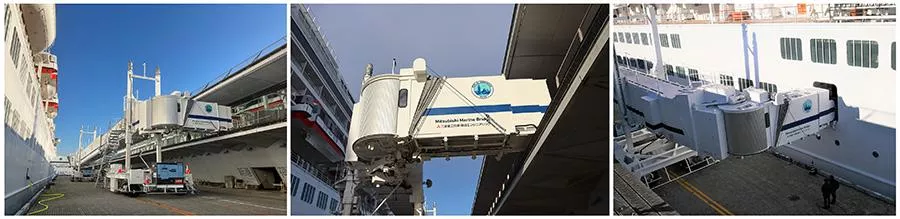
Tuas South Incineration Plant (TSIP)TOKYO, Mar 26, 2026 - (JCN Newswire via SeaPRwire.com) - Mitsubishi Heavy Industries Asia Pacific Pte. Ltd. (MHI-AP), a regional subsidiary of the Mitsubishi Heavy Industries (MHI) Group, has been awarded a contract from Singapore's National Environment Agency (NEA) for boiler retrofit work at the Tuas South Incineration Plant (TSIP) located in the Tuas district in western Singapore. The retrofit aims to stabilize the waste handling capacity of the stoker-type incinerator(1) and extend the facility's operational lifespan. Expected completion is scheduled for the fourth quarter of 2027. The retrofit will be undertaken by Mitsubishi Heavy Industries Environmental & Chemical Engineering Co., Ltd. (MHIEC), a part of the MHI Group.TSIP was originally designed and constructed by MHI and was completed in 2000. It has a daily processing capacity of 3,000 tons and is operated and maintained by NEA.MHIEC will be responsible for the design, construction, and operational support under this retrofit contract. In Singapore, maintaining the plant's throughput while ensuring stable operations has become a major challenge. In this retrofit project, MHIEC aims to achieve both objectives by leveraging its expertise as the original designer and constructor of the existing facility to propose the optimal scope of refurbishment, which will help to extend the plant's operational lifespan. MHIEC will incorporate design modifications for certain sections of the boiler tubes to be replaced. After completion, MHIEC will also provide ongoing support to ensure reliable plant performance.MHIEC has delivered a total of four waste-to-energy incineration facilities in Singapore since commencing operations of the Tuas Incineration Plant (TIP) in 1986. In Singapore, MHIEC is strengthening its commitment not only to the conventional areas of equipment supply, facility design, and construction, but also to facility operations & maintenance services through concession business and after-sales services including operational support.MHI Group will continue its long-standing commitment to help Singapore reach its sustainable waste management and decarbonization goals through energy recovery from waste.(1) A stoker-type incinerator is a mainstream municipal waste incineration furnace that burns waste by pushing it forward on a grate composed of heat-resistant metal bars while supplying air from below.About MHI GroupMitsubishi Heavy Industries (MHI) Group is one of the world’s leading industrial groups, spanning energy, smart infrastructure, industrial machinery, aerospace and defense. MHI Group combines cutting-edge technology with deep experience to deliver innovative, integrated solutions that help to realize a carbon neutral world, improve the quality of life and ensure a safer world. For more information, please visit www.mhi.com or follow our insights and stories on spectra.mhi.com  Copyright 2026 JCN Newswire via SeaPRwire.com. All rights reserved. www.jcnnewswire.com

New York’s Three Full Casino Licensees Project Massive Annual Revenues

(AsiaGameHub) -   A recent report indicates that New York’s three full casino licensees have the potential to achieve annual gaming revenues as high as $5.6 billion.  Final approval for the three new licenses was granted by the New York State Gaming Commission in December. Following a competitive selection process, the sought-after licenses were awarded to Bally’s Bronx, Hard Rock Metropolitan Park in Queens, and Resorts World New York City at Aqueduct Racetrack.  An analysis by CBRE Institutional Research suggests all three locations are poised to be highly profitable. The completion of all projects is anticipated by 2031.  For their first full year of operation, the base-case estimate for Gross Gaming Revenue (GGR) is $4.7 billion. This would position the region as the second-largest gaming market in the United States, trailing only Las Vegas.  CBRE stated, “The Downstate New York market is significantly under-penetrated, and there is a strong case for each of the three projects to be among the highest revenue-generating casinos across regional gaming.” Huge Gaming Floors to Attract New York Gamblers New York is already a leader in sports betting, with its handle hitting $26.3 billion in 2025. The state exhibits a substantial appetite for wagering, and the new casinos will offer numerous gambling opportunities for residents.  CBRE explained, “The proposed gaming floors are massive, featuring some of the largest table game areas, if not the largest, seen in regional gaming, with over 200, 400, and 500 tables planned for Bally’s Bronx, [Hard Rock] and RWNYC, respectively.” Upon full completion, Resorts World NYC is projected to be the largest casino in the US, equipped with 6,000 slot machines and 800 gaming tables.  The company plans to launch the initial phase of the full-scale casino later this year, offering up to 4,000 slot machines and 250 table games. “RWNYC should also benefit from having existing casino infrastructure in place and an already established customer base, as the proposed project is an expansion of the existing facility rather than a ground-up development,” CBRA stated in its report. Other New Venues Set for 2030 Openings The two other venues will be constructed from the ground up. Hard Rock Metropolitan Park is planned to include roughly 5,000 slot machines and 375 table games, which will incorporate 30 poker tables. Developers expect to break ground this year, aiming for an opening around 2030. Bally’s Bronx is also scheduled for a full opening in 2030, with plans for approximately 3,500 slot machines, 210–250 table games, and 40 poker tables.  All three casinos are situated in prime locations to draw visitors. CBRE observed, “Each location benefits from a high volume of passerby traffic, non-gaming-specific reasons to visit, and a large population base within a reasonable drive-to and/or train-to radius.” Gaming Expected to Dominate Revenue According to analysts, a bullish scenario projects total annual revenue reaching $7.8 billion, with gaming expected to contribute over 70% of that total.  “This contrasts with Las Vegas, where gaming accounts for less than one-third of Strip property revenue. We do not expect Downstate New York to resemble the Vegas model – these will remain gaming-dominated properties, especially given the higher margins associated with gaming versus hotel or ancillary spending,” said CBRE.  New York is not anticipated to experience the same declining visitor figures as Vegas. Over 65 million people visited the Big Apple last year. Resorts World will have the largest hotel capacity with about 2,000 rooms, followed by Metropolitan Park with 1,000, and Bally’s Bronx with slightly more than 500.  As reported by Inside Asian Gaming, analysts Colin Mansfield and Connor Parks said the hotels are unlikely to compete with New York City’s already substantial cash-paying customer base and will instead be largely reserved to drive gaming demand.  This article is provided by a third-party. AsiaGameHub (https://asiagamehub.com/) makes no warranties regarding its content. AsiaGameHub delivers targeted distribution for iGaming, Casino, and eSports, connecting 3,000+ premium Asian media outlets and 80,000+ specialized influencers across ASEAN.

South Korean Police Note Surge in Illegal Currency Exchanges Serving Chinese Gamblers

(AsiaGameHub) -   Authorities in South Korea report that illicit money exchange operations are focusing on Chinese gamblers within the island province of Jeju. The region, a major destination for Chinese travelers, features eight casinos restricted to foreign nationals. Law enforcement officials note a spike in local crime, attributing the trend to an increase in gambling-related pursuits. According to the South Korean newspaper Dong-A Ilbo, the Jeju Metropolitan Police Agency recently announced a series of security measures aimed at curbing these offenses. The agency highlighted a growing number of illegal currency transactions involving foreign passport holders. A police representative explained that these unauthorized brokers serve undocumented individuals and casino visitors looking to move large sums of money abroad while bypassing legal remittance caps. Chinese Gamblers: Authorities Launch Crackdown on Exchanges Beyond currency, these operators offer illicit loans, which often escalate into serious offenses like kidnapping, extortion, assault, and fraud, according to the spokesperson. Police also warned that fraudsters have begun preying on undocumented immigrants and Chinese gamblers in the Jeju area. In one instance from February, a Chinese national in his 50s lost 30 million won (approximately $20,000) to a scammer posing as a broker. The two individuals connected via the WeChat social media platform. Officers stated the victim handed over the funds under the impression that the operator would securely transfer the money to China. However, the suspect reportedly vanished after receiving the cash and failed to complete the international transfer. Officials emphasized that these illegal activities frequently result in violent encounters. Last November, three individuals were detained for the two-hour abduction of a Chinese woman in her 30s inside a hotel room. The victim was located in a luxury Jeju City hotel that houses a casino. She informed authorities that she had intended to exchange $87,000 worth of Chinese yuan for local currency. Additionally, a year ago, three Chinese citizens, including a woman in her 40s, were apprehended for the fatal stabbing of an illegal broker to settle gambling debts. The group was accused of stealing roughly $57,000 in valuables, including casino chips and cash. Law Enforcement Issues Public Warning Jeju police told the press they anticipate a further rise in such crimes as the number of tourists continues to grow. Between 2022 and 2024, visitor arrivals surged to 662,976, nearly a fourfold increase. During that same timeframe, casino earnings reached $324 million. The casino located at the Jeju Shinhwa World resort in Seogwipo, Jeju Province, South Korea. (Image: jejushinhwaworld/Facebook) To combat this, a specialized WeChat channel has been established for reporting suspicious activity to Jeju’s Foreign Affairs Police Force. Authorities are also intensifying social media outreach targeting international visitors. The Jeju police plan to display promotional materials in casinos and high-traffic areas to encourage the use of legitimate financial institutions. A sub-tropical beach scene on South Korea's Jeju Island. (Image: Jungjin Moon) A spokesperson warned that utilizing black-market exchanges puts individuals at risk of violent crimes against their person and property. Local government officials are supporting the initiative through casino inspections to ensure entry protocols are followed. A similar effort last year uncovered 15 procedural violations. In September, Jeju police detained several Chinese nationals following what was described as a “riot” at a casino. The incident involved approximately 50 Chinese citizens and casino staff after a player accused a dealer of cheating during a card game. This article is provided by a third-party. AsiaGameHub (https://asiagamehub.com/) makes no warranties regarding its content. AsiaGameHub delivers targeted distribution for iGaming, Casino, and eSports, connecting 3,000+ premium Asian media outlets and 80,000+ specialized influencers across ASEAN.

IGT Cuts 700 Jobs as Part of Restructuring

(AsiaGameHub) -   Slot machine developer International Game Technology (IGT) is conducting global layoffs of 700 employees, which constitutes roughly 10% of the company's workforce.  CEO Hector Fernandez notified employees of the job reductions via a letter sent on Monday. Since taking on his position in December of last year, Fernandez has been assessing the company's workforce.  “We looked into our areas of focus, our operational methods, and how our structure aligns with our strategy. As part of this evaluation, we were compelled to make tough choices regarding our organizational setup, and this process has resulted in a challenging yet essential step,” he wrote. The layoffs are not tied to employee performance; instead, they aim to streamline operations following last year's merger with Everi. The merger was part of a takeover by New York-based firm Apollo, which agreed to acquire both companies for $6.3 billion in 2024.  Fernandez was appointed to lead the newly formed company and added, “The changes we are announcing today are part of our endeavor to simplify our structure, eliminate redundancies, and allow us to operate with increased clarity and speed.” Plan Devised During Year of Waiting Fernandez noted that severance packages are being offered to affected employees. He added, “For those departing IGT as a result of this action, we are dedicated to providing severance pay, outplacement assistance, and transition resources.” Prior to assuming his CEO role, he was required to wait a year due to a non-compete agreement from his former position as CEO of Aristocrat.  During his year away, he stated that he developed a business plan centered on the 5 C’s: culture, capabilities, content, commercialization, and cash-flow generation. “I crafted the plan, strategy, and execution approach for this role. I couldn’t engage in competition, but I could apply my intellect. That’s exactly what I did,” said Fernandez.  Company Moves to Next Chapter Fernandez encouraged remaining employees to unite and push the company forward.  “What is crucial now is how we progress collectively: supporting one another, concentrating on our priorities, and continuing the work that will shape the next chapter of our company. We joined forces to build an enterprise capable of leading in a fast-evolving industry, and I remain confident in that opportunity and in the strength of our team,” he told staff.  The layoffs were first reported by the Las Vegas Review-Journal, though the outlet did not specify how many of the job losses are in Nevada.  IGT operates two facilities in the state, including a Las Vegas location near Buffalo Drive and Sunset Road. The company moved its headquarters to Vegas last year following the merger.  The company also has employees in Texas, California, Oklahoma, and New Jersey. Internationally, it maintains a presence in Europe, Australia, India, and Latin America.  In his letter, Fernandez did not specify the locations of the job cuts. When announcing the deal to acquire IGT and Everi, Dave Cohen, a partner at Apollo, stated, “We are eager to collaborate with all individuals at IGT Gaming and Everi to advance the combined enterprise.” This article is provided by a third-party. AsiaGameHub (https://asiagamehub.com/) makes no warranties regarding its content. AsiaGameHub delivers targeted distribution for iGaming, Casino, and eSports, connecting 3,000+ premium Asian media outlets and 80,000+ specialized influencers across ASEAN.

Indonesian Psychiatrists Alert on Escalating Gambling-Related Hospital Admissions

(AsiaGameHub) -   Medical professionals in Indonesia report a sharp increase in inpatients suffering from gambling addictions, with several hospitals struggling to manage the rising patient count. The Indonesian media outlet Jatim Times reports that the surge in patient numbers is driving a steep rise in hospital bed occupancy rates. Officials note that during certain times of the year, these rates have exceeded 90%. Doctors attribute much of this trend to severe gambling addiction. Staff at Surabaya’s Menur Mental Hospital stated that between January and April 2025, the facility treated 51 patients with serious gambling disorders—16 of whom were inpatients. By May, that number had reached 85. These statistics point to a significant upward trend. For the entire year of 2024, the same hospital treated a total of 68 gambling addicts. Trend Extends to Other Parts of Indonesia The Surabaya figures are not isolated. Physicians in the capital, Jakarta, have reported similar patterns. In November 2024, Indonesian media outlet Radar Bangkalan reported that staff at Dr. Cipto Mangunkusumo Hospital (RSCM) said around 100 people had received inpatient treatment for gambling-related issues in recent months. The Dr. Cipto Mangunkusumo Hospital in Jakarta, Indonesia. (Image: Edogang1) Kristiana Siste Kurniasanti, head of the hospital’s Psychiatry Division, noted there has been a “significant rise” in the number of patients with similar conditions. She said approximately 200 outpatients are also receiving treatment for gambling addiction, adding that some patients are as young as 14. Siste stated the figures doubled in 2023 and tripled the following year. “These figures have continued to balloon,” she added. “Addicts don’t know when it’s morning, afternoon, or evening anymore,” she told Indonesian media outlets last week. “They don’t even know when their money is gone. Addicts will go to any lengths to find money to gamble. They even commit crimes, such as stealing other people’s money and belongings.” Experts told Radar Bangkalan that similar cases “have been found in many areas,” with the number of patients likely much higher in other parts of the country. Medics said online gambling began to gain traction in Indonesia during the coronavirus pandemic. They blamed easily accessible online loan providers for enabling people to bet on credit. Earlier this month, police in Kupang city arrested a taxi driver they said had become addicted to gambling. The 30-year-old man allegedly pawned his employer’s car to fund his online betting sprees. Police Make Arrests Meanwhile, police continue their crackdown on online casinos, which has so far seen regulators freeze tens of thousands of dollars in hundreds of citizens’ bank accounts. Officials say all the accounts were used to make deposits or withdrawals on online casino platforms. In East Java’s Ngawi Regency, regional police officers report they have arrested six people on suspicion of using their mobile phones to gamble online. The media outlet Surya Indonesia reported that police confiscated all six suspects’ mobile phones and bank cards. At a press conference, they showed media representatives screenshots of banking applications they said the suspects used to place online bets. “We will crack down on all social ills, including […] online gambling,” a police official told the press. “We ask for the community’s help in this matter. Together, we can work to create a safe and comfortable environment in the Ngawi Regency.” This article is provided by a third-party. AsiaGameHub (https://asiagamehub.com/) makes no warranties regarding its content. AsiaGameHub delivers targeted distribution for iGaming, Casino, and eSports, connecting 3,000+ premium Asian media outlets and 80,000+ specialized influencers across ASEAN.

Public Health Group Files Lawsuit Against DraftKings, FanDuel, Genius Sports, NFL Over ‘Addictive’ Microbetting

(AsiaGameHub) -   DraftKings, FanDuel, Genius Sports, and the National Football League are facing a product liability lawsuit filed by the Public Health Advocacy Institute (PHAI), which claims the firms collaborated to develop and profit from an “unreasonably dangerous” online gambling product built to fuel addiction. The 81-page legal filing was submitted on March 24 at the Court of Common Pleas of Philadelphia County on behalf of two Pennsylvania residents: Christopher Sage and Terry Thompson. Live microbetting, which lets users place quick, consecutive bets during a sporting event, is the core focus of this lawsuit.  The plaintiffs claim that the design elements of online sports betting platforms — such as tailored promotions, real-time statistics, and VIP outreach — are crafted to amplify addictive betting habits.  Combined, the plaintiffs state they placed millions in bets and lost over $2 million while using the FanDuel and DraftKings Sportsbook applications.  In the press release announcing the lawsuit, Mark Gottlieb, executive director at PHAI, said:  “These defendants, including the NFL, are working in tandem to turn regular sports fans into constant gamblers. By leveraging coordinated immersive marketing, artificial intelligence, cloud computing, and customer-specific algorithms, they manipulate users’ cognitive processes and inflict lasting, severe harm on long-time fans like Mr. Sage and Mr. Thompson.” The lawsuit alleges that the tactics used by these firms transform “casual sports fans and recreational bettors into compulsive gambling addicts.”  By naming parties across the entire sports betting ecosystem — including sportsbook operators, data suppliers, and the NFL directly — the filing argues the system is set up so every participant helps boost betting volume, with all parties walking away with profits.  The plaintiffs are requesting both compensatory and punitive damages, plus an injunction to halt the defendants’ supposedly wrongful conduct. Lawsuit Targets Microbetting, Personalization & ‘Always-On’ Gambling The “flawed design” of the named sports betting platforms lies at the heart of this lawsuit. The filing draws a comparison between modern apps and traditional sports betting, where fans had to travel to place wagers before a game began and then wait for the final outcome, claiming DraftKings and FanDuel eliminated those natural restrictions and replaced them with a quicker, constantly accessible system centered on in-game live microbetting. The filing claims these apps “remove the limitations that once constrained in-person sports betting locations,” crafting a “tailored and ultra-fast sports gambling interface.” The lawsuit explains how these quick bets placed on individual pitches, plays, shots, or other in-game moments impact bettors, stating they trigger a “trancelike state known as ‘dark flow,’ where users become fully immersed in the game.”  Unlike standard sports bets, which are settled only once a game concludes, microbets can be resolved in just a few seconds. All these elements create a fast feedback cycle that keeps users engaged and pushes them to place repeat bets.  To support its case, the lawsuit draws a parallel between microbets and slot machines, noting that the practice “fully immerses users in the constant cycle of ‘pulling the lever’ or clicking to place the next microbet while waiting for the next potential win.” As a result, the plaintiffs allege:  Christopher Sage developed a serious gambling addiction after using the apps, losing more than $40,000 on DraftKings and $130,300 on FanDuel. Terry Thompson faced even more devastating losses, with a total of approximately $1.52 million on FanDuel and $336,000 on DraftKings. The filing also points out the role that tailored marketing plays in fueling addictive betting on these platforms, such as push notifications and VIP hosts assigned to high-spending users. The lawsuit claims that in some instances, these outreach efforts continued even after users tried to cut back or stop their gambling entirely. These elements, the lawsuit contends, lead to a product design that prioritizes user engagement and corporate profits over the safety of bettors, drawing comparisons to highly addictive substances such as heroin, cocaine, and tobacco. Commenting on the lawsuit, PHAI Litigation Director Andrew Rainer said:  “Following the example set by the tobacco industry, the online sports gambling sector has crafted a highly addictive, nearly impossible-to-resist product that blasts consumers with dozens of betting chances each and every minute, leaving a wake of shattered lives, including our clients Chris Sage and Terry Thompson. “Instead of continuing to line their pockets with billions in annual profits, those responsible for this destruction — DraftKings, FanDuel, Genius Sports, and tragically, the NFL — must be held accountable. This is the process we are launching today.” Lawsuit Puts NFL, Genius Sports Relationship Under Scrutiny A notable aspect of this lawsuit is the inclusion of the NFL and Genius Sports, whom the filing identifies as critical enablers of the modern sports betting ecosystem.  Genius Sports holds exclusive rights to distribute NFL data to sportsbooks, supplying the real-time statistics required to run microbetting markets. The lawsuit claims the NFL has a direct financial stake in this system, as it holds an equity share in Genius Sports and its licensing agreements. “The NFL Defendants engaged in unfair or misleading practices by providing DraftKings and FanDuel, via Genius Sports, with officially licensed live NFL game and player data and statistics — data they knew was essential for DraftKings and FanDuel to build microbetting options into the design of their Sportsbook apps,” the lawsuit alleges.  Per the filing, this partnership benefits both organizations when betting volume rises, particularly high-frequency bets like microbets, which bring in significant commission revenue. PHAI, the group that filed this lawsuit, has a long track record of legal actions against the tobacco industry, including public liability cases that resulted in multibillion-dollar settlements in the 1990s. Whether the group will achieve similar success in its fight against the sports betting industry will now be determined by the courts.  This article is provided by a third-party. AsiaGameHub (https://asiagamehub.com/) makes no warranties regarding its content. AsiaGameHub delivers targeted distribution for iGaming, Casino, and eSports, connecting 3,000+ premium Asian media outlets and 80,000+ specialized influencers across ASEAN.

Curtis and Schiff Introduce Bipartisan Bill to Ban Sports Prediction Market Contracts

(AsiaGameHub) -   Sens. John Curtis (R-UT) and Adam Schiff (D-CA) unveiled bipartisan legislation on March 23 that would prohibit prediction markets overseen by the Commodity Futures Trading Commission (CFTC) from offering contracts tied to sports events and casino-style activities. This proposed bill joins a growing roster of legislative efforts aimed at curbing prediction markets as these platforms face heightened oversight from lawmakers on Capitol Hill.  The Prediction Markets Are Gambling Act would revise the Commodity Exchange Act (CEA) to prevent registered entities from providing contracts related to sporting events, athletic contests, or casino-type games. Should the bill become law, it would explicitly affirm that states hold complete jurisdiction over sports betting and casino-style gambling. Prediction markets are offering sports bets — just with a different name. They are being offered in states where sports betting is illegal, like California, while federal regulators are greenlighting them rather than enforcing the law.My bipartisan legislation with… pic.twitter.com/oNvI2vw9IP— Adam Schiff (@SenAdamSchiff) March 23, 2026 This legislation emerges at a time when sports-related contracts are a major point of contention in discussions about the legality of prediction markets. State regulators, tribal representatives, industry associations, and certain legislators have contended that sports event contracts are no different from sports betting, serving as a loophole that lets CFTC-regulated platforms bypass state laws and operate in regions where conventional sports wagering is limited or prohibited. Redefining the Rules of the Game In its current form, the bill would resolve the ongoing debate about whether event contracts are legitimate hedging instruments or merely digital bets. The legislation would modify the CEA to clearly define and prohibit contracts linked to “sporting events or athletic competitions” and “casino-style games”—a category that covers everything from slot machine activities to professional and college sports. Speaking about the proposed legislation, Curtis put it in terms of state authority and consumer protection: “Too many young people in Utah are getting exposed to addictive sports betting and casino-style gaming contracts that belong under state control, not under federal regulators. Our bipartisan legislation clarifies regulatory jurisdiction, ensuring that states can maintain their authority over sports betting and casino gaming.” Schiff was more straightforward in criticizing the current setup of prediction markets, asserting that “sports prediction contracts are sports bets—just under a different label.” He noted these products are available across the country “in blatant violation of state and federal laws” and framed the bill as a means to shut a regulatory “backdoor” that undermines state consumer safeguards and tribal self-governance. Capitol Hill Continues to Ramp Up Pressure on Prediction Markets The Prediction Markets Are Gambling Act is the newest addition to a recent surge of legislative measures aimed at prediction markets—an industry Schiff referred to as the “Wild West” when he introduced the DEATH BETS Act on March 11.  Beyond sports and casino-style activities, Congress is targeting prediction markets from several angles as it seeks to impose stricter regulations on these platforms:  Political Integrity: Rep. Ritchie Torres (D-NY) put forward the Public Integrity in Financial Prediction Markets Act, which would prohibit federal officials from trading in government-related contracts when they have access to nonpublic information. The “Death Bets” Ban: Senator Schiff also recently unveiled the DEATH BETS Act, which explicitly forbids contracts linked to war, assassinations, or the death of an individual. Consumer Protections: The Prediction Markets Security and Integrity Act, backed by Sen. Richard Blumenthal (D-CT) and Sen. Andy Kim (D-NJ), suggests a more comprehensive regulatory structure that includes age verification requirements and a prohibition on using credit cards for betting. As prediction markets grow in popularity, Capitol Hill lawmakers are signaling their intent to influence the future direction of the industry. This article is provided by a third-party. AsiaGameHub (https://asiagamehub.com/) makes no warranties regarding its content. AsiaGameHub delivers targeted distribution for iGaming, Casino, and eSports, connecting 3,000+ premium Asian media outlets and 80,000+ specialized influencers across ASEAN.

PGA Tour: Texas Children’s Houston Open Odds, Picks and Predictions

(AsiaGameHub) -   The PGA Tour schedule rolls on this week with the Texas Children’s Houston Open, and Scottie Scheffler enters the event as the primary betting favorite. Matt Fitzpatrick is coming off his third career PGA Tour title at last week’s Valspar Championship, while Min Woo Lee returns as the defending champion of the Texas Children’s Houston Open. Texas Children’s Houston Open Betting Odds at DraftKings Below are the odds for the top contenders to win the Texas Children’s Houston Open according to DraftKings: Scottie Scheffler +320 Min Woo Lee +1800 Chris Gotterup +2500 Jake Knapp +2600 Sam Burns +2800 Brooks Koepka +2900 Kurt Kitayama +3000 Rickie Fowler +3300 Nicolai Hojgaard +3300 Marco Penge +3800 Michael Thorbjornsen +3900 Ben Griffin +4000 Adam Scott +4300 Harris English +4300 Ryan Gerard +4500 Harry Hall +4600 Keith Mitchell +4700 Taylor Pendrith +5200 Rasmus Hojgaard +5200 Wyndham Clark +5400 Shane Lowry +5500 Pierceson Coody +5500 Sam Stevens +5600 Sahith Theegala +5900 Alex Smalley +6200 Davis Thompson +6400 Jason Day +6500 Tony Finau +6600 Stephan Jaeger +6600 Ricky Castillo +6800 Sungjae Im +7000 Top Favorite Bet for the Texas Children’s Houston Open Chris Gotterup (+2500) Memorial Park is a course that rewards long hitters, making Chris Gotterup a prime candidate for success this week. Gotterup currently sits at sixth on the tour in driving distance, averaging 319.1 yards. His personal best this year was a 367-yard drive at the WM Phoenix Open, a tournament he won back in February. Additionally, Gotterup secured a victory at the Sony Open to begin his 2026 season. He has shown he can handle the pressure of contention and could find himself in the winner's circle again on Sunday. Top Sleeper Bet for the Texas Children’s Houston Open Michael Thorbjornsen +3900 Michael Thorbjornsen appears to be on the verge of his first victory on the PGA Tour. He recently went head-to-head with Gotterup at the WM Phoenix Open, finishing just one stroke behind the lead. Thorbjornsen also played in the final pairing at The Players Championship alongside Ludvig Aberg, though a difficult 5-over round resulted in a T-22 finish. As a powerful driver who also performs well on the greens, he has a strong chance to secure his first tour win in Houston. Top Longshot Bet for the Texas Children’s Houston Open Tony Finau +6600 Tony Finau is a past champion at this event, winning the 2023 Houston Open before returning to claim a runner-up finish the following year. Finau arrives in Houston following a solid T-18 performance at last week's Valspar Championship. While his overall form is strong, he can occasionally struggle with his accuracy off the tee. That should not be a major concern at Memorial Park, a venue that is forgiving off the tee and features the fewest bunkers of any course on the tour. This article is provided by a third-party. AsiaGameHub (https://asiagamehub.com/) makes no warranties regarding its content. AsiaGameHub delivers targeted distribution for iGaming, Casino, and eSports, connecting 3,000+ premium Asian media outlets and 80,000+ specialized influencers across ASEAN.

Spanish Gaming Behemoth Codere Available for Sale at €2 Billion

(AsiaGameHub) -   Codere, Spain’s second-largest gambling company after Cirsa, is being offered for sale with a valuation of approximately €2 billion ($2.3 billion).  According to a report from Spanish news outlet Expansión, the company has engaged US firm Jefferies and Australia-based Macquarie Capital as financial advisors to oversee the sale process.  Sale To Complete In Summer The process remains in its early stages, with a provisional mid-May deadline for interested parties to submit non-binding offers. Binding offers are expected to be submitted around July, with a purchase agreement finalized by August.  Established by the Martínez Sampedro family in 1980, the company has undergone multiple restructurings in recent years. Its current shareholding is now distributed among roughly 84 investment funds, with Davidson Kempner holding a 13.3% stake, followed by Palmerston Capital (5.6%), Deltroit (5.47%), System 2 Capital (5.15%), and Invesco (5.14%). Company in Good Financial Health A 2024 agreement with creditors converted approximately €1.2 billion of debt into equity. Gonzaga Higuero, the company’s CEO, described the deal as “a decisive success for Codere, a guarantee for the future that secures our financial position and reactivates the company’s ability to achieve its set growth objectives.” In 2024, the group recorded revenues of €1.346 billion ($1.56 billion) and an adjusted EBITDA of €179 million ($207 million).  The company operates in seven countries: Spain, Italy, Argentina, Mexico, Panama, Colombia, and Uruguay, through both physical gambling venues and online platforms. Its business includes slot machines, bingo halls, sports betting terminals, arcades, gaming rooms, bars, and racetracks.  Its online division is listed separately on the Nasdaq but will also be included in the sale. This segment accounted for 12% of total revenue in 2024.  Spain No Longer Highest Revenue Stream Though founded in Spain, the country’s strict stance on gambling has led to reduced revenue there. Codere was among several companies fined by Spain’s regulator last year during a gambling crackdown. The company was fined €17,500 for using unapproved technical systems. In 2024, Italy and Mexico contributed 21% and 17% of the company’s revenue, respectively, while Spain generated around 16%.  Gambling companies in Spain must comply with stricter regulations, including displaying strongly worded warning messages similar to those on tobacco products. These measures were introduced by the country last year.   The new messages include: Gambling addiction is a risk of gambling The probability of being a losing gambler is 75% Losses for all gamblers are four times greater than their winnings  Minister for Social Rights Pablo Bustinduy has led the reforms, stating that “the responsibility should not fall on users but on the authorities, who have the democratic duty to ensure that the environments they access are safe.” It remains unclear whether Spain’s stricter gambling regulations will impact the potential sale of Codere. This article is provided by a third-party. AsiaGameHub (https://asiagamehub.com/) makes no warranties regarding its content. AsiaGameHub delivers targeted distribution for iGaming, Casino, and eSports, connecting 3,000+ premium Asian media outlets and 80,000+ specialized influencers across ASEAN.

WEMADE Schedules Legend of YMIR Launch on Steam for April 7

(AsiaGameHub) -   WEMADE is set to roll out the global edition of Legend of YMIR on Steam at 10:00 AM KST on April 7, 2026. This launch expands the company’s PC distribution reach as it aims to grow the MMORPG’s global player base. Good to Know Legend of YMIR is scheduled to debut on Steam on April 7, 2026. A new class named Rune Fighter will be available alongside the launch. WEMADE is leveraging Steam to increase global accessibility and build a more sustainable long-term player base. WEMADE Aligns Steam Launch with Broader YMIR Expansion Strategy Instead of viewing Steam as merely another storefront, WEMADE is integrating it as a core component of Legend of YMIR’s global strategy. The company stated that the platform will help it reach more PC gamers, enhance accessibility, and foster a more resilient user base over time. The Steam edition will also include a major content update. WEMADE is introducing the Rune Fighter, a new combat class centered on rune abilities and a more adaptable fighting style. This addition is designed to offer new players an alternative entry point while providing existing users with fresh content. Put simply, WEMADE is combining distribution expansion with gameplay updates simultaneously. This makes the launch more impactful than a standard platform release and helps position Legend of YMIR as a more prominent global PC franchise.Michael Kim, Head of Game Business Division at WEMADE, commented: “Our goal is to provide a premium PC gaming experience that lives up to the standards of the Steam community. Launching on a new platform alongside the ‘Rune Fighter’ expansion marks the beginning of a new era for our players.” For WEMADE, the Steam launch is also significant because PC gaming platforms with large built-in audiences can help MMORPG publishers keep acquisition costs low while boosting long-term visibility. With Legend of YMIR, the company is clearly targeting broader reach, stronger player retention, and a more established presence in the global PC gaming market. This article is provided by a third-party. AsiaGameHub (https://asiagamehub.com/) makes no warranties regarding its content. AsiaGameHub delivers targeted distribution for iGaming, Casino, and eSports, connecting 3,000+ premium Asian media outlets and 80,000+ specialized influencers across ASEAN.

STS Becomes a Member of IBIA Betting Integrity Network

(AsiaGameHub) -   STS has become a member of the International Betting Integrity Association, bringing one of Central Europe’s largest regulated sportsbook brands into the broader integrity network. The agreement connects STS to IBIA’s Global Monitoring and Alert Platform and expands coverage in Poland and neighboring markets. Good to Know STS is Poland’s leading sportsbook operator. IBIA’s monitoring network includes over 200 betting brands. The platform monitors more than $300 billion in annual betting turnover. IBIA has added another major European operator, as STS now contributes to its Global MAP system. This provides the integrity organization with greater visibility into regulated betting activity and gives STS an additional way to report suspicious betting patterns. Established in 1997, STS developed its business through both online and retail betting. It now ranks as Poland’s top sportsbook brand and one of Central Europe’s most prominent names. Due to this scale, the partnership enhances the IBIA network’s market coverage in a meaningful way. For STS, the agreement aligns with its broader emphasis on safer, more secure betting operations. The company stated that the partnership will assist in detecting and reporting unusual activity while fostering closer collaboration with other stakeholders in regulated betting.Radim Haluza, CEO of STS, said: “Collaborating with the International Betting Integrity Association reflects STS’s long-standing commitment to protecting the integrity of sport and ensuring a secure betting environment for our customers. We recognise the importance of proactive integrity monitoring and close cooperation with stakeholders across the regulated ecosystem. Through IBIA’s Global MAP, we are strengthening our ability to identify and report suspicious activity and contribute to the wider fight against betting-related corruption.” IBIA noted that STS brings both scale and market expertise to the platform. Global MAP already features over 200 betting brands and monitors more than $300 billion in annual sports betting turnover, so adding a major operator focused on Poland extends the system’s reach in Europe. Khalid Ali, CEO of IBIA, said:“We are delighted to welcome STS to IBIA. The operator brings significant scale and expertise to our Global MAP and reinforces IBIA’s position as the leading integrity body for the regulated betting industry. We look forward to working closely with STS to safeguard sport, protecting customers and support regulated betting markets.” This article is provided by a third-party. AsiaGameHub (https://asiagamehub.com/) makes no warranties regarding its content. AsiaGameHub delivers targeted distribution for iGaming, Casino, and eSports, connecting 3,000+ premium Asian media outlets and 80,000+ specialized influencers across ASEAN.

Sportradar Unveils Playradar for Sports and Casino

(AsiaGameHub) -   Sportradar Group AG has introduced Playradar, a fresh iGaming brand designed for operators seeking to integrate sports content and casino offerings into a unified platform. This launch marks a significant expansion of Sportradar's iGaming strategy, with a rollout planned through 2026 across the UK, North America, and Latin America. Key Highlights Playradar integrates sports data, audiovisual streams, virtual sports, and casino gaming. Edo Haitin has been appointed to head Sportradar’s iGaming division. Playradar will exclusively serve regulated markets. Sportradar Revamps iGaming Portfolio with Playradar Sportradar is moving to bridge the gap between sportsbook and casino offerings. By leveraging live and historical sports data, streaming capabilities, and casino mechanics, Playradar aims to provide operators with hybrid gaming products centered on sports engagement. A core feature is the 24/7 Experience Centre, which allows users to view live streams and engage with games simultaneously on one screen. Sportradar notes that this format is designed to foster both general engagement and real-money wagering, while enabling real-time interaction among players. Furthermore, Playradar will provide hybrid content that transforms live and historical sporting events into event-driven gameplay. The platform will also feature a live prediction tool powered by Sportradar’s real-time data, alongside a suite of virtual sports, slots, table games, arcade titles, and crash games.Sportradar has tapped Edo Haitin, the former CEO of Playtech Live, to lead its iGaming operations. Haitin brings over two decades of expertise in senior leadership, operations, and live casino management. Carsten Koerl, Founder and CEO of Sportradar, stated: “iGaming is a logical and scalable progression for our company and a strategic move to accelerate our long-term growth. Playradar’s content is crafted to optimize cross-selling between sports and casino environments, assisting operators in boosting player value and session duration during a period where retention and engagement are vital for operational success. In Edo, we have a seasoned industry leader to guide this business, backed by a dedicated and enthusiastic team.” With an existing infrastructure that includes a game studio, sports data tools, streaming technology, and a global distribution network, Sportradar is well-positioned to help its clients—many of whom already operate in both sportsbook and casino sectors—enhance player value and engagement through Playradar.Edo Haitin, EVP of iGaming, added: “By merging our extensive expertise in sports data and live streaming with our proven product development capabilities, we intend to build hybrid gaming experiences that tap into the growing demand for sports-themed casino content. We are uniquely equipped to integrate live and historical sports events with innovative mechanics and casino products, while benefiting from our ability to distribute these games to an existing network of licensed operators. I am thrilled to be expanding our iGaming footprint through Playradar and to establish it as a leader in the space, utilizing Sportradar’s robust resources and our highly skilled team.” This article is provided by a third-party. AsiaGameHub (https://asiagamehub.com/) makes no warranties regarding its content. AsiaGameHub delivers targeted distribution for iGaming, Casino, and eSports, connecting 3,000+ premium Asian media outlets and 80,000+ specialized influencers across ASEAN.

Meta Hit With $375 Million Jury Verdict in New Mexico Child Safety Lawsuit

(AsiaGameHub) -   On Tuesday, a jury based in Santa Fe ordered Meta to pay $375 million in civil penalties following a six-week trial examining child safety practices on Facebook and Instagram. The ruling secured a win for New Mexico under the state’s Unfair Practices Act, and counts as one of the most severe courtroom setbacks Meta has faced in a case connected to harm experienced by young platform users. Key Details Jurors found Meta liable for both claims that New Mexico filed against the company. The fine was set at $5,000 for each individual violation, the highest amount allowed under New Mexico state law. The second phase of the case is scheduled for May 4, and may result in additional penalties as well as changes to platform policies. New Mexico Jury Delivers a Major Legal Defeat to Meta While the monetary sum is notable, the greater significance may lie in what the ruling represents. In a press release distributed immediately after the verdict, the office of New Mexico Attorney General Raúl Torrez stated the ruling was a “watershed moment for every parent concerned about what could happen to their kids when they go online,” Torrez structured the case around the gap between Meta’s internal knowledge and its public communications. He stated: “Meta executives knew their products harmed children, disregarded warnings from their own employees, and lied to the public about what they knew. Today the jury joined families, educators, and child safety experts in saying enough is enough.” During the trial, New Mexico’s legal team drew on evidence from a 2023 undercover operation that used decoy Facebook and Instagram accounts set up to appear as if they belonged to users under the age of 14. Per the state’s findings, these accounts were sent sexually explicit content and received sexual solicitations from multiple men located in New Mexico. Law enforcement arrested those men in May 2024, with two taken into custody at a motel where they believed they were meeting a 12-year-old girl. State attorneys also used internal company records and testimony from former Meta employees to argue that repeated warnings from staff and child safety experts failed to result in adequate action from the firm. Some of the most impactful testimony came from Arturo Béjar, a former engineering and product leader at Meta, who told jurors he attempted to raise alarms after his 14-year-old daughter received unsolicited sexual advances on Instagram. He also outlined the dangerous functionality of the platform’s recommendation systems. “The product is very good at connecting people with interests,” Béjar said, “and if your interest is little girls, it will be really good at connecting you with little girls.” Another former executive, Brian Boland, testified that safety did not appear to be a genuine priority for the company’s senior leadership. Boland, who worked at Meta for nearly 12 years before leaving in 2020, said he “absolutely did not believe that safety was a priority” for CEO Mark Zuckerberg and then-COO Sheryl Sandberg. Jurors were also shown a recorded deposition from Zuckerberg. In the recording, he described research investigating whether the platforms are addictive as “inconclusive.” New Mexico’s legal team pushed back on this claim, pointing to internal research that found certain product features were designed to trigger dopamine responses and extend the amount of time users spend on the apps. When asked if a parent had a right to know if a product their child uses is addictive, Zuckerberg responded that there was a lot to “unpack in that.” Meta has announced it intends to appeal the ruling. A company spokesperson said the firm “works hard to keep people safe” on its platforms and that it “respectfully disagree[s] with the verdict.” The New Mexico case is not the only legal battle Meta is currently facing. A separate trial in Los Angeles also centers on allegations that social media platforms are addictive and caused harm to young users. That case was filed by a California woman identified as K.G.M. TikTok and Snap reached settlement agreements before the trial started, while Meta and YouTube remain defendants in the case. Jurors for that trial are still deliberating, and the judge recently instructed them to continue discussions after they indicated they were having trouble reaching a verdict for one defendant. The next stage of the New Mexico case will launch on May 4. That phase is a bench trial focused on public nuisance claims, meaning a judge rather than a jury will determine the outcome. New Mexico is arguing that Facebook and Instagram caused broader harm to the health and safety of state residents, and this portion of the case could lead to additional penalties, age verification requirements, and stronger protections for minors. This article is provided by a third-party. AsiaGameHub (https://asiagamehub.com/) makes no warranties regarding its content. AsiaGameHub delivers targeted distribution for iGaming, Casino, and eSports, connecting 3,000+ premium Asian media outlets and 80,000+ specialized influencers across ASEAN.

New Jersey Moves Forward with Bill Against Micro Betting

(AsiaGameHub) -   New Jersey is edging closer to prohibiting micro bets, one of the speediest types of in-game wagering. On March 23, a Senate committee approved SB 2160, sending the bill to the Senate floor for a second reading. Good to Know SB 2160 would prohibit wagers on the next play, pitch, or immediate in-game action. Senators Paul Moriarty and Patrick Diegnan are the bill’s sponsors. Penalties would be $500 to $1,000 per violation. New Jersey Pushes Back Against Micro Betting The bill would prevent sportsbooks from offering or taking wagers on outcomes like whether the next baseball pitch will be a strike or if the next football play will be a run or pass. Unlike regular live betting, micro bets are settled in seconds and let users place another wager right away. Supporters cite two key risks. Moriarty noted that the format is more easily manipulated, as an insider with info on the next play could gain an advantage. He also stated that the product’s speed can lead to excessive, impulsive gambling. Diegnan added that the nonstop betting opportunities make micro bets riskier than traditional wagering. Violations would be classified as a disorderly persons offense.New Jersey doesn’t release separate data on micro bets, but Rutgers University research for state regulators found in-game betting makes up a significant portion of activity. The most recent study showed that two-thirds of state bettors place in-game wagers, and high-intensity bettors make up over 50% of in-game volume. The research also found that in-game betting increases the likelihood of overspending. Operators have already demonstrated the importance of live betting. DraftKings CEO Jason Robins stated during a first-quarter 2025 earnings call that live betting accounted for over half of the company’s handle. In established European markets, in-game betting makes up more than 60% of wagers. New Jersey isn’t the only one. New York has proposed similar legislation, and Major League Baseball struck agreements last November to limit pitch-level bets to $200 and exclude them from parlays, citing integrity issues. This article is provided by a third-party. AsiaGameHub (https://asiagamehub.com/) makes no warranties regarding its content. AsiaGameHub delivers targeted distribution for iGaming, Casino, and eSports, connecting 3,000+ premium Asian media outlets and 80,000+ specialized influencers across ASEAN.

Sumitomo Heavy Industries and NEC to develop system capable of identifying and reporting near-miss incidents

TOKYO, Mar 25, 2026 - (JCN Newswire via SeaPRwire.com) - Sumitomo Heavy Industries, Ltd. (SHI) and NEC Corporation (NEC) will begin joint development in April 2026 of a system that automatically identifies near-miss incidents at construction sites and generates reports as part of promoting safety. The system utilizes camera footage and sensor data collected from hydraulic excavators, aiming to prevent accidents.Overview of safety measure implementation using the jointly developed systemBackgroundConstruction industry operations are heavily influenced by unpredictable factors such as weather, geological conditions, and constantly changing work environments, resulting in frequent hazardous incidents. To enhance safety, there is growing demand for new support systems that leverage digital technologies. One such demand is for a system capable of automatically extracting, visualizing, and summarizing potentially hazardous scenes ("risk scenes") from site-specific and time-dependent video footage and work logs. However, within the construction industry, no technology is currently available for comprehensively supporting the entire process—from the accumulation of video data on construction machinery operations, to the extraction of risk scenes, the analysis and visualization of near-miss incidents, and, ultimately, the generation of reports in an end to-end manner.Against this backdrop, SHI—leveraging its expertise in construction machinery and data analytics—and NEC, with its long-cultivated capabilities in video recognition and cutting edge generative AI technologies, will jointly initiate the development of a first-of-its-kind system for the construction industry that automatically extracts near miss incidents and generates corresponding reports based on camera footage and sensor data captured from hydraulic excavators.OverviewThe new system will utilize an extraction AI model, trained on real world hydraulic excavator data accumulated on the SHI Group’s ICT/IoT common platform "SHICuTe" (1), to first identify and extract risk scenes from recorded video footage. These risk scenes, together with operational data from the hydraulic excavators, will then be analyzed using NEC’s proprietary technology that combines video recognition with generative AI (2), and stored as multimodal data incorporating temporal and spatial information. Based on this data, along with SHI’s expertise in construction-site machinery operations and human workflows, the system will cross reference hazardous and prohibited behavior data—which are defined by accidents, construction equipment failures, and operations requiring particular attention—as well as company specific data. Based on these matching results, the system will automatically identify the risk scenes that should be reported and automatically generate high quality near miss reports that provide a concise summary of the circumstances surrounding each incident.Prior to this initiative, a technical proof of concept was conducted in September 2025 to verify a system that automatically extracts near miss incidents and generates reports from video footage captured by cameras mounted on hydraulic excavators. The results confirmed that, based on the risk scenes extracted from the footage, the system was able to report near miss cases—including potential accident scenarios and their associated circumstances. Building on these outcomes, the joint development starting in April 2026 will aim to further expand the types of near miss incidents that can be identified and enhance the report generation capabilities in line with customers’ safety management needs, thereby contributing to the realization of safer construction sites.Process for generating near miss reportsOutlookIn fiscal year 2026, technical development and validation of the system will be advanced by utilizing on site data and safety management expertise from SHI, together with AI technologies and advanced technology consulting services provided by NEC, with the aim of achieving practical implementation in fiscal year 2027. Looking ahead, the companies plan to broaden the system’s applicability beyond scenes where physical contact between workers and machinery may lead to occupational accidents to include unsafe conditions that may not be readily recognized by workers, as well as considerations for site specific operational rules, thereby further expanding its scope of use.SHI and NEC will continue to combine their respective strengths to develop and validate new technologies, contributing to the realization of safer construction sites.(1) SHICuTe is a common platform that enables cross functional development of capabilities across the product lines of the SHI Group. It collects and stores various operational data from the group’s products connected online. "SHICuTe" is a registered trademark of Sumitomo Heavy Industries, Ltd.(2) "NEC uses generative AI (LLM) and video recognition AI to automatically generate explanatory text from video - Applied to drive recorder videos, cutting accident report creation time in half -" (Announced by NEC on December 5, 2023) https://www.nec.com/en/press/202312/global_20231205_01.htmlAbout this technologyA new hope for zero construction-site accidents, born from a fusion of construction machinery data and LLMs ― A collaborative innovation by Sumitomo Heavy Industries and NEC URL: https://www.nec.com/en/global/rd/technologies/202512/index.htmlAbout NECThe NEC Group leverages technology to create social value and promote a more sustainable world where everyone has the chance to reach their full potential. NEC Corporation was established in 1899. Today, the NEC Group’s approximately 110,000 employees utilize world-leading AI, security, and communications technologies to solve the most pressing needs of customers and society.For more information, please visit https://www.nec.com, and follow us on LinkedIn and YouTube. Copyright 2026 JCN Newswire via SeaPRwire.com. All rights reserved. www.jcnnewswire.com

Wall Street Divided Over Prediction Markets

(AsiaGameHub) -   Financial institutions are divided on prediction markets. While certain companies are expanding into the space, others are prohibiting staff participation due to increasing regulatory worries. Good to Know Trading in prediction markets has been prohibited for employees at Point72 Asset Management and Balyasny Asset Management. JPMorgan Chase permits participation as long as standard personal trading guidelines are followed. A more proactive strategy is being adopted by Susquehanna International Group and DRW. Divergent Stances on Prediction Markets Across Wall Street According to Bloomberg, Point72 Asset Management and Balyasny Asset Management have instituted total bans on staff trading, despite other firms recently considering specialized desks and recruiting talent with expertise in Kalshi and Polymarket. This shift highlights a rapid change in outlook. Compliance departments are concerned about legal disputes, the risk of insider trading, and the lack of regulatory clarity surrounding the industry. Documentation remains a significant hurdle. In the U.S., these markets are classified as derivatives under CFTC oversight. However, platforms like Polymarket and Kalshi often lack the electronic record-keeping capabilities required for firms to monitor and report compliance.Approaches vary across the industry. JPMorgan Chase has informed its staff that they may engage in these markets provided they adhere to the same personal trading protocols applied to other asset classes. Some organizations are doubling down. Susquehanna International Group employs approximately 60 traders focused on prediction markets in Dublin and Pennsylvania. Additionally, the company serves as Kalshi's inaugural official market maker and maintains an equity position in the platform. DRW is also seeking a specialized prediction market trader to handle strategies involving arbitrage, market-making, and event-driven plays on platforms like Kalshi and Polymarket. The Investment Adviser Association, representing over 600 firms with roughly $35 trillion in assets under management, noted a significant increase in inquiries from members regarding compliance within prediction markets. This article is provided by a third-party. AsiaGameHub (https://asiagamehub.com/) makes no warranties regarding its content. AsiaGameHub delivers targeted distribution for iGaming, Casino, and eSports, connecting 3,000+ premium Asian media outlets and 80,000+ specialized influencers across ASEAN.

Study Involving 525 Women Sparks New Discussion About Gambling Advertising

(AsiaGameHub) -   A recent Australian study has examined the influence of gambling marketing on the attitudes of women in Victoria. According to researchers, contemporary advertising, influencer material, sports affiliations, and brand initiatives are normalizing betting and downplaying its associated risks. Good to Know The study involved 525 women in Victoria aged 18 to 40. 79% said they had gambled in the previous 12 months. Researchers said influencer campaigns, women sports sponsorships, and cause-linked promotions were key concerns. Academics from Deakin University and Curtin University reported that many participants perceived gambling as more socially acceptable due to current marketing strategies. The research highlighted indirect methods, such as collaborations with influencers, novelty betting markets related to entertainment, and promotions associated with women's sports or charitable causes, rather than just overt advertisements. Three main themes emerged from the feedback: gambling appeared more normalized, women felt increasingly encouraged to participate, and the risks seemed minimized. Some respondents stated that betting promotions are crafted to "encourage," "attract," and "tempt" new customers, particularly younger women whose lifestyles are intertwined with platforms like Instagram and TikTok. Conducted online between June 14 and July 1, 2024, the survey targeted women aged 18 to 40 in Victoria. The majority (76%) resided in metropolitan Melbourne, and the average age was 31. The study found that 79% of participants had engaged in gambling within the past year.Strong criticism was directed at the tone and framing of the advertisements. Women reported that promotions often present betting as a casual, social, or safe activity. One participant remarked: “I think there is a lot of harm in promoting gambling in this way for anyone.” She added: “It makes an addictive activity appear harmless.” Another participant noted: “They make it seem harmless and can become a light joke.” The study identified influencer marketing as a significant factor in this perception. The survey reported: “Social media influencers were described as ‘relatable’ and ‘desirable’, and their involvement in gambling promotions was seen to make gambling seem glamorous and aspirational.” Researchers also emphasized a strategy perceived by respondents as gender-targeted reputation management by betting firms. Initiatives linked to International Women's Day or breast cancer awareness month were frequently met with skepticism. Nonetheless, some women conceded that such campaigns could foster trust in gambling brands, potentially enhancing the impact of their marketing.A sense of FOMO (fear of missing out) was also evident. Some participants expressed that when betting is integrated into entertainment, sports, and social media, it begins to feel like a standard aspect of contemporary living. In this environment, gambling can appear less hazardous and more like an expected social activity. The paper contextualized these findings within the broader Australian landscape, citing data that indicates annual gambling participation rates among Victorian women are nearly equal to those of men, with approximately half gambling yearly and one-third doing so monthly. The researchers contended that current regulations might be insufficient, as the primary influence now stems from indirect promotion instead of direct advertising. They advocated for stricter controls on influencer agreements, novelty markets connected to popular culture, and corporate social responsibility projects that also function as brand marketing. The authors also supported targeted public education campaigns designed to help women identify these marketing tactics and better evaluate the risks of gambling. At iGaming.org, we advise caution in attributing significant policy weight to a study of this nature. The sample size of 525 is relatively small, the methodology is subjective, and the findings are largely based on qualitative attitudes rather than quantifiable behavioral data. It is also reasonable to question the exclusive focus on women and whether this approach lends the study an authority that the core data may not entirely justify. This article is provided by a third-party. AsiaGameHub (https://asiagamehub.com/) makes no warranties regarding its content. AsiaGameHub delivers targeted distribution for iGaming, Casino, and eSports, connecting 3,000+ premium Asian media outlets and 80,000+ specialized influencers across ASEAN.

Whatnot Faces Accusations of Facilitating Illegal Gambling via Card Breaks

(AsiaGameHub) -   California lawsuits are applying new pressure to Whatnot regarding how sports card breaks are sold on its platform. Plaintiffs argue the format amounts to illegal gambling, but the company disputes this and states gambling is prohibited on the site. Good to Know The cases encompass 15 arbitration claims with 30 plaintiffs. Plaintiffs assert that random card breaks and repacks violate California gaming laws. Whatnot stated it denies the claims and prohibits gambling on its platform. California Lawsuits Target the Random Aspect of Whatnot’s Card Sales A California legal battle now centers on one of the most popular elements of the modern sports card market. Instead of targeting standard card sales, the lawsuits zero in on live breaks and repacks—where buyers pay before learning which cards they’ll receive. That difference is significant. Plaintiffs aren’t challenging direct card purchases where the item is known in advance. Instead, they’re targeting the random format tied to unopened boxes and repack products. In these breaks, customers pay first, then a streamer opens the product live, and the final value can fluctuate drastically based on what’s inside. The lawsuits claim this setup resembles a lottery more than retail. Buyers pay for a shot at something valuable, with outcomes unknown until the pack is opened during the stream. Plaintiffs contend this structure violates state rules against illegal lotteries.Whatnot is a key player in the industry. The platform reported over $8 billion in sales in 2025 and moves more than six million trading cards monthly. That scale is one reason the case could have implications far beyond a single company—if plaintiffs win, it could reshape how live card breaks operate across the broader hobby. The complaints sharply criticize the platform’s self-representation. “Whatnot claims to run a ‘marketplace’ where live shopping connects ‘buyers’ and ‘sellers.’ This is a facade,” the case’s plaintiffs told The Athletic. The filing goes further: “In practice, Whatnot runs an unregulated online casino that preys on its customers by encouraging compulsive spending—generating billions in revenue without the protections mandatory for regulated gambling operations.” Allegations of Addiction That argument is supported by addiction claims from those involved in the cases. Attorney Paul Lesko told The Athletic that several clients were drawn in by the randomness and the thrill of the bidding and reveal process. “Our clients quickly became addicted to it,” he said. “… At some point, they even stop caring about the cards. It’s just the dopamine rush from bidding and winning an auction to secure a spot for the chance to get a team they want.”Repacks are also at the heart of the dispute. Unlike factory-sealed products, repacks are assembled by operators from cards they’ve already collected, then resold for break-style reveals. Critics say this adds another layer of concern because the product exists mainly for randomized resale. Plaintiffs are seeking multiple remedies: restitution, warnings for future breaks, spending limits, punitive damages, and a court ruling that the disputed activity is unlawful. Whatnot is pushing back. The company denied operating illegal gambling through its platform. In a statement to The Athletic, it said: “We completely reject the characterization in this complaint.” The company added: “Gambling isn’t allowed on Whatnot, and we enforce this policy rigorously.” This article is provided by a third-party. AsiaGameHub (https://asiagamehub.com/) makes no warranties regarding its content. AsiaGameHub delivers targeted distribution for iGaming, Casino, and eSports, connecting 3,000+ premium Asian media outlets and 80,000+ specialized influencers across ASEAN.

NCAA Files Lawsuit Against DraftKings for Using March Madness and Associated Tournament Terms

(AsiaGameHub) -   A fresh legal battle has begun between the NCAA and DraftKings regarding betting promotions linked to college basketball tournament branding. The disagreement focuses on whether DraftKings is allowed to use popular NCAA tournament terms in sportsbook menus, advertisements, and other consumer-facing materials. Good to Know The NCAA is seeking an emergency restraining order against DraftKings. The terms in question include March Madness, Final Four, Elite Eight, and Sweet Sixteen. DraftKings claims its use of these terms is descriptive and protected by the First Amendment. Instead of concentrating on betting regulations, the most recent conflict between college sports and sportsbooks revolves around branding. In a lawsuit filed in the U.S. District Court for the Southern District of Indiana, the NCAA requested a judge to prohibit DraftKings from using a set of tournament-related terms across its sportsbook products and promotions. The case hinges on “March Madness,” “Final Four,” “Elite Eight,” and “Sweet Sixteen,” plus their related variations. According to the NCAA, these marks serve to identify and distinguish its men’s and women’s basketball tournaments across broadcasts, digital platforms, merchandise, sponsorships, and licensed business operations. The legal filing states that DraftKings integrated these terms into betting menus, marketing materials, and promotional visuals shown to users. Screenshots from DraftKings’ platforms were included as exhibits in the complaint.Wrong Timing? Timing plays a significant role in the NCAA’s argument. The association alleged that DraftKings began using the terms when public attention around the tournaments was at its peak. “On the eve of the Tournaments, DraftKings deliberately adopted and prominently began using the NCAA iconic NCAA Basketball Marks, including confusingly similar variations thereof, to trade on — and usurp — the immense goodwill, recognition, and consumer trust embodied in those Marks at the precise moment of peak public attention,” the complaint said. The NCAA further contended that this unauthorized use quickly spread across customer-facing channels. “DraftKings unlawful use quickly proliferated across its consumer-facing websites and mobile applications, embedding the marks and logos into betting menus, promotional graphics, and marketing publications, to deliberately exacerbate consumer confusion and reinforce a false association with or sponsorship by the NCAA in order to continuously capitalize on the goodwill of the NCAA,” the complaint said. DraftKings is taking a completely different stance. The company stated that it does not treat “March Madness” as a trademark in its sportsbook displays; instead, it uses the phrase in plain text to identify tournament games. “DraftKings does not use the term March Madness as a trademark, but rather uses it in plain text and as a fair use in the same manner that other tournaments are displayed, such as the NIT, in order to accurately identify the different tournaments and their respective games,” DraftKings said. “It is protected speech under the First Amendment and is not a violation of any brand trademark. We are confident that the courts will deny this request for an injunction.” Beyond the trademark dispute, the NCAA used this case to emphasize its broader separation from gambling operators. The association noted that it has rejected sportsbook sponsorships, banned athletes and staff from participating in betting, and opposed prop bets and micro-bets. It also highlighted ongoing efforts to reduce harassment and improper influence tied to college sports wagering.This broader concern resurfaced in a separate NCAA statement related to the complaint. “Every day that DraftKings continues to use these marks, millions of sports fans — and, critically, college students and young adults who are particularly susceptible to gambling harm — are exposed to the false suggestion that the Association has authorized or endorsed DraftKings gambling platform,” the NCAA said in a statement. FAQ What is the NCAA asking the court to do? The NCAA is seeking an emergency restraining order that would require DraftKings to stop using tournament-related terms in its sportsbook offerings, advertising, and associated materials. Which terms are in dispute? The complaint lists March Madness, Final Four, Elite Eight, and Sweet Sixteen, along with similar variations, as the terms at issue. Where was the complaint filed? The NCAA submitted the complaint to the U.S. District Court for the Southern District of Indiana. What is DraftKings defense? DraftKings asserts that it uses the terms descriptively in plain text (not as trademarks) and that this use is protected speech under the First Amendment. Why does the NCAA say the use is harmful? The NCAA argues that the use creates consumer confusion and implies a false connection or endorsement between the association and the sportsbook.What wider gambling concerns did the NCAA mention? The association stated that it avoids sportsbook partnerships, prohibits betting by athletes and staff, and opposes wagering formats like prop bets and micro-bets. This article is provided by a third-party. AsiaGameHub (https://asiagamehub.com/) makes no warranties regarding its content. AsiaGameHub delivers targeted distribution for iGaming, Casino, and eSports, connecting 3,000+ premium Asian media outlets and 80,000+ specialized influencers across ASEAN.

NEC Orchestrating Future Fund Invests in U.S.-based AGI7, Provider of “Alpha Vision” Platform for Autonomous Operations of AI Agents in Physical Spaces

TOKYO, Mar 25, 2026 - (JCN Newswire via SeaPRwire.com) - NEC Corporation's (NEC; TSE: 6701) ecosystem-based corporate venture capital (CVC) fund, NEC Orchestrating Future Fund (NOFF), has invested in AGI7, Inc. (AGI7), provider of the Physical AI platform "Alpha Vision." This platform enables AI agents to understand physical spaces and to automatically execute effective responses to detected events.In recent years, a wide variety of sites, including stores, warehouses, construction sites, data centers, event venues, and public infrastructure, have seen growing needs for advancing safety measures, addressing labor shortages, integrating visualization across multiple locations, and making rapid decisions. However, there are limits to manually and continuously monitoring the vast amounts of video and sensor data collected from cameras and IoT devices. Consequently, there is a rapidly growing demand for AI that can understand physical spaces and perform advanced visualization and evaluation.AGI7's Alpha Vision leverages existing camera infrastructure, enabling AI to grasp the conditions of physical spaces in real time. The platform features multiple AI agents that automatically perform tasks such as patrols, risk detection, voice guidance, situation assessment, and report generation. A "Magic Search" function enables language searches across dispersed video data to instantly identify past events and activities. Combined with AI agent-generated reports, this reduces daily operational burdens and facilitates rapid decision-making. This approach is gaining traction in retail, logistics, construction, and other sectors, drawing attention as a next-generation Physical AI platform revolutionizing operation models for physical spaces.Through this investment, NEC will combine its video analytics technology and expertise in public safety with AGI7's advanced Physical AI platform to contribute to realizing a safe, secure, and resilient world.AGI7 Co-Founder & CEO Song Cao"We are honored to welcome the investment from the NEC Orchestrating Future Fund and deeply appreciate their confidence in our Physical AI technology. AGI7’s 'Alpha Vision' platform fundamentally solves labor shortages and operational inefficiencies by enabling AI agents to autonomously perceive, interpret and react to real-world events. Through this strategic partnership with NEC and their global expertise, we look forward to deploying our technology at scale and jointly accelerating the automation and intelligent transformation of physical operations across all environments."NEC Corporate SVP Shigeki Wada"Ensuring field safety and optimizing operational efficiency are increasingly vital for supporting social infrastructure. AGI7's AI platform for physical spaces enables AI agents to accurately perceive events in the physical world and translate them into effective assessments and actions. By combining this with NEC's long-accumulated expertise in public safety and industrial domains, we will contribute to advancing field operations and creating new social value."About NECThe NEC Group leverages technology to create social value and promote a more sustainable world where everyone has the chance to reach their full potential. NEC Corporation was established in 1899. Today, the NEC Group’s approximately 110,000 employees utilize world-leading AI, security, and communications technologies to solve the most pressing needs of customers and society.For more information, please visit https://www.nec.com, and follow us on LinkedIn and YouTube. Copyright 2026 JCN Newswire via SeaPRwire.com. All rights reserved. www.jcnnewswire.com