Posts by fang:

Ex-Gambling Addict Shares Experience of Losing Control and Path to Recovery

(AsiaGameHub) -   In the past week, new lawsuits have targeted US betting firms, accusing them of promoting problematic gambling habits. In the UK, Bet365 faced criticism for not stepping in to prevent the death of a 19-year-old gambler. This has sparked debate over the responsibility of operators when gamblers lose control. We spoke with a recovered gambling addict to learn about his journey to overcoming the issue and his perspective on who bears blame. A UK inquest determined that Arthur Soames died by suicide, with his mental health struggles worsened by gambling. The coroner stated that on the day of his death, Soames had “drained all available funds and credit.” “That’s exactly how I felt,” remembers another UK resident who acknowledges battling a gambling addiction. He chose to stay anonymous, having never disclosed the full extent of his struggles to friends or family. “I took out bank loans, maxed out my overdraft, and had nothing left. I recall placing accumulators—parlays for those in the US—that could have recouped some losses. One looked set to win, but a team from a country I’d never heard of scored in the final minute, making me lose. I collapsed on the floor, screaming.” We asked the anonymous gambler about his recovery in an interview this week. “I searched online for ways to get out of debt and found something called Debt Management Plans. I contacted StepChange, and they were incredible. They reached out to my banks, froze interest on my loans, and I set up a repayment plan.” StepChange is a free UK service that assists people in managing debt. With a manageable payment plan, his finances stabilized, though the urge to gamble remained strong. “I still thought maybe I could win it all back. I’d been up before—had around £10,000 ($13,000) in my bank at one point. But then I lost it all and kept losing, trying to recover what I’d spent. “I lost that £10,000 and another £10,000. The biggest issue was chasing losses. I’d gamble on sports; if I lost, I’d switch to online casino games like blackjack or roulette, hoping to win back what I’d lost. Then I’d lose there too and keep gambling more to recover.” He remembers a day when he lost over £7,000 in a single session. “I used to have a strategy: I’d draw a line of how much I wanted to win. If I aimed for £100, I’d list five £20 increments. I’d place a bet combining two numbers—if I won, I’d cross off two; if I lost, I’d add one. In theory, I could profit by winning fewer times than losing. With a 50-50 bet like red or black on roulette, I thought it was a solid strategy. It worked—that’s how I won £10,000. But then it failed, and I lost 12 spins in a row.” The gambler’s fallacy suggests that if the roulette wheel lands on red, black becomes more likely next. Some roulette strategies advise increasing stakes, doubling down. Such traps can lead players to lose large sums. A different approach might be that of AC Milan manager Max Allegri, who gave large tips to dealers to influence wheel spins toward winning bets. “I kept betting on red, but it kept landing on black. The numbers on my line grew, and soon my bank account was empty. I think I lost over £2,000 on one spin—more than I earned in a month.” How did he stop? “After enrolling in the debt management plan, my mindset shifted. I finally realized I’d never get back that £10,000 I’d won. I gave up.” “I also left the UK. That helped—no more gambling shops around, no gambling ads in sight.” Are Gambling Companies to Blame? Calls to ban gambling advertising in the UK have grown louder. Starting next season, the Premier League will no longer feature betting companies on the front of team shirts, though anti-gambling groups urge the government to take more action and restrict all promotions. “Substantial evidence shows gambling harms many who engage with it and those around them, with advertising key to both starting and increasing gambling,” says the Coalition to End Gambling Advertising (CEGA). “There’s also evidence that gambling ads threaten recovery for those who’ve stopped.” The gambler we spoke to said changing his environment was crucial to quitting. He moved to a country with few betting options and made new friends who didn’t discuss gambling. Is banning gambling ads the solution? “I’m not sure ads need to be banned. Most people can bet without issues, but I lose control. It’s the same with other vices—alcohol, drugs, smoking, you name it.” Do you blame gambling companies? “No. I was the one who lost the money. I placed the bets. I don’t believe the companies went out of their way to encourage me. I think the key is for people to be informed. Understand your chances of winning. Consider how much you can afford to lose and never try to recoup losses. Money will return over time. It took me around four years to repay all I’d lost. At first, it seemed like it would never end, but I settled all debts about eight years ago.” Last week, we spoke to Robert Walker, author of a new book on DraftKings and the backlash the company faces over claims it promotes problematic gambling. Walker similarly emphasized that gamblers should take responsibility and understand why operators offer incentives like free bets to encourage gambling. Empathy Is Everything Are you still tempted to gamble? “Not really. I might bet on football (soccer) sometimes, but I know I won’t make money. Since paying off my debt, I’ve barely placed any bets.” Did you seek other help? “No. I never told anyone. Shame held me back. People say you shouldn’t fear asking for help, but I preferred keeping it to myself. I knew friends or family would be shocked and judge me. I didn’t want to be labeled a gambling addict—it feels like a failure, like weakness.” Noah Vineberg, another recovering gambling addict, says, “Empathy is everything.” He added, “Recovery is the greatest gift you’ll ever give yourself.” If you’re struggling with gambling and want to share your story, contact adam@casinobeats.com. Resources are available to help in the UK and the US. This article is provided by a third-party. AsiaGameHub (https://asiagamehub.com/) makes no warranties regarding its content. AsiaGameHub delivers targeted distribution for iGaming, Casino, and eSports, connecting 3,000+ premium Asian media outlets and 80,000+ specialized influencers across ASEAN.

Casino and Prediction Market Lobbying Surges as Legal Conflict Escalates

(AsiaGameHub) -   Commercial and tribal casinos are actively engaging lobbyists to represent their interests, engaging in a competitive effort against prediction markets as the debate over the legality of sports event contracts intensifies. Kalshi CEO Tarek Mansour has alleged that casino lobbyists are behind recent legislative efforts aimed at prohibiting prediction markets. Casino lobby hard at work.There is a reason tens of millions of people use regulated prediction markets: it’s a better product.Banning just pushes this offshore, where no regulation exists.This bill isn’t about protecting consumers; it’s about protecting monopolies. https://t.co/otzm0U4Te8— Tarek Mansour (@mansourtarek_) March 23, 2026 Senator Adam Schiff was a co-sponsor of the Prediction Markets are Gambling Act introduced last week. Tribal casino groups are among the significant contributors to Schiff’s campaigns. The Federated Indians of Graton Rancheria in the Bay Area and the Agua Caliente Band of Cahuilla Indians each donated $100,000 to a pro-Schiff PAC. These tribal groups have vigorously worked to maintain their exclusive control over gambling operations in California. The two tribes collectively contributed over $40 million to a campaign that opposed Proposition 26, a measure that would have legalized sports betting in the state. Kalshi has previously run advertisements with the slogan, “Sports betting in California is now legal.” Consequently, it is unsurprising that politicians supported by tribal interests are intensifying their efforts to impede the company. Schiff is also a co-sponsor of legislation designed to prevent government officials from profiting from event contracts by using insider information. Kalshi Responds With Increased Funding On the opposing side, Mansour and Kalshi are escalating their efforts to advocate for the legality of sports prediction markets. The company allocated over $1 million to lobbying initiatives last year. Only two gambling organizations, the American Gaming Association (AGA) and the Gila River Indian Community, invested more in lobbying. The AGA comprises numerous tribal groups, and several of its members have strongly opposed sports event contracts. This has created internal discord within the organization, leading to the departure of FanDuel and DraftKings as they introduce their own prediction market platforms. Kalshi’s largest expenditure last year was $430,000 to Miller Strategies LLC for “issues regarding rule proposal before the CFTC.” This firm collaborates closely with Donald Trump Jr., who serves as an advisor to both Kalshi and Polymarket. Furthermore, several officials appointed by Trump have a vested interest in maintaining the legal standing of sports prediction markets. According to ProPublica, three of these officials hold assets in Kalshi, 46 have connections to Robinhood, and 138 are linked to Coinbase. Trump Media has also entered into a partnership with Crypto.com, a deal that will integrate the platform’s markets into Truth Social. Financial Influence Drives Stance Changes Kalshi also provided $180,000 to the Lincoln Policy Group last year. This financial support contributed to a shift in the stance of its founder, former Sen. Blanche Lincoln, regarding sports event contracts. Previously, she had stated that sports contracts “would not serve any real commercial purpose. Rather, they would be used solely for gambling.” She is now registered as a lobbyist for Kalshi. In July of the previous year, she sent a letter to the CFTC, urging the organization not to impose restrictions on sports markets. The establishment of the Coalition for Prediction Markets is expected to result in intensified lobbying efforts. According to experts, its members, including Kalshi, Coinbase, and Robinhood, are positioned to rival the casino lobby groups. “We believe these groups have the balance sheets to sustain prolonged political influence and lobbying efforts,” Citizens analyst Jordan Bender informed Sportico. Last year, casino and gambling-affiliated groups spent nearly $50 million on lobbying, a record high. They may need to increase this spending further as prediction markets intensify their advocacy. This article is provided by a third-party. AsiaGameHub (https://asiagamehub.com/) makes no warranties regarding its content. AsiaGameHub delivers targeted distribution for iGaming, Casino, and eSports, connecting 3,000+ premium Asian media outlets and 80,000+ specialized influencers across ASEAN.

Thai Sports Chiefs Aim to Remove Snooker from Gambling Act Following Un-Nooh’s Success

(AsiaGameHub) -   Sports advocates, prominent politicians, and championship-winning players are calling on Thai officials to remove snooker from gambling-related legislation. These demands follow a surge in Thai snooker popularity triggered by Thepchaiya Un-Nooh’s recent victory. Un-Nooh, known as “F1,” claimed victory at the World Open in Yushan, China, earlier this month, defeating Ronnie O’Sullivan, one of snooker's greatest players ever, in the championship match. Thepchaiya Un-Nooh triumphed at the World Open in Yushan, China, earlier this year. The Thai champion beat the seasoned British player 10-7, achieving a perfect 147 break during the match. However, supporters contend that aspiring young Thai snooker players face obstacles in emulating Un-Nooh's success due to a 1935 law. Thai Snooker Gambling Classification ‘Hurts Players’ According to Thai publication The Standard, the Gambling Act categorizes snooker and billiards as "gambling-like activities" instead of sports. These non-sporting classifications require official permits that are difficult for smaller clubs to acquire, and effectively prohibit players under 18 from participating in snooker. This categorization also restricts the growth of snooker infrastructure, youth training programs, and commercial tournaments. Kongsak Yodmani, Governor of the Sports Authority of Thailand (SAT), announced that the authority will soon file an official petition with the Ministry of Interior to exclude snooker from the Gambling Act. The SAT governor stated that this action would help "elevate snooker" to recognition as a "fully professional sport," creating opportunities for structural development across youth and national programs. Kongsak added that the new classification would enable Thai companies and sports organizations to host snooker events and produce income for the government. Champion Speaks Out The SAT pledged to require club owners to post clear warning signs about gambling risks during matches. "This issue requires discussion between the SAT and the snooker association," Kongsak explained. "All stakeholders must establish clear boundaries and show that our goal in reclassifying snooker is purely to promote it as a sport." The SAT and other supporters held a press conference on March 25, calling on the government to support their proposal. Participants included Un-Nooh, who told journalists that snooker "has been a part of Thai society for a long time," according to Thai news source Thairath Online. People's Party legislator Rakchanok Srinok urged the government to take swift action following Un-Nooh's triumph. She emphasized the significance of enabling young talents to train and achieve international recognition. In the Spotlight Thailand's gambling regulations have attracted significant attention recently. Last year, under former Prime Minister Paetongtarn Shinawatra, the government attempted to classify poker as a sport. Bangkok aimed to draw major poker events to the nation and build integrated casino resorts. However, after the Constitutional Court removed Paetongtarn from office, the government reversed its position, reclassifying poker as gambling. Anti-gambling advocates have also condemned politicians for exploiting lottery policies to gain votes. Thais reportedly wager approximately $8 billion annually on lottery tickets, yet several political parties promised voters they would expand lottery offerings. In the lead-up to last month's general election, the ruling Pheu Thai Party vowed to create nine new "millionaires" daily if victorious. The party pledged to reform current lotteries to guarantee nine winners per day of a 1 million baht prize, valued at over $30,000. This article is provided by a third-party. AsiaGameHub (https://asiagamehub.com/) makes no warranties regarding its content. AsiaGameHub delivers targeted distribution for iGaming, Casino, and eSports, connecting 3,000+ premium Asian media outlets and 80,000+ specialized influencers across ASEAN.

March Madness Draws New Attention to Bettor Abuse of College Athletes

(AsiaGameHub) -   As the Final Four is now determined and March Madness approaches its conclusion, findings from a recent NCAA Student-Athlete Needs, Aspirations and Perspectives (SNAP) survey illuminate how sports wagering continues to influence the experiences of numerous Division I athletes.Men's Division I basketball players indicated the highest levels of betting-related mistreatment in the survey, with one in three stating that fans had directly held them responsible for gambling losses, while close to half (46%) experienced some type of online, verbal, or physical harassment. A majority of student-athletes (52%) feel that sports betting leads to undue examination of athletes, while 55% indicated it erodes the integrity of competition. In the press release announcing the survey results, NCAA President Charlie Baker said: "This season can be enchanting for numerous players, yet it can swiftly turn into a horror story because of mistreatment from fans who participate in sports betting. The NCAA is vigorously striving to safeguard collegiate athletes by tracking abuse via our partnerships with Signify and Venmo, and we are taking all possible measures to stop student-athletes from encountering such mistreatment. However, sportsbooks and regulators in certain states could take further action immediately by removing the proposition wagers that we know are causing harassment." Men's Basketball Players Endure the Bulk of Fan Mistreatment The NCAA sent the survey to nearly 56,000 Division I student-athletes at participating institutions from February 23 to March 2. In total, 7,493 athletes from 154 schools replied. Per the NCAA, the survey examined social media usage, views on betting and athletic integrity, firsthand encounters with bettor mistreatment, and the impact such abuse can have on wellness and athletic output. Although the study revealed that worries about sports betting are common, the outcomes for men's basketball were particularly notable. The survey indicates that 33% of Division I men's basketball players stated that fans directly faulted them for their gambling losses, with an additional 44% experiencing online mistreatment, and 26% encountering verbal or physical abuse. In total, 65% of surveyed athletes think that when fans single out players regarding sports betting, "the competitive spirit is undermined," while 62% stated that betting-related mistreatment "diminishes confidence between fans and athletes." The survey discovered that the impact of betting-related abuse extends well beyond an athlete's email or social media comment threads. Among athletes who had personally experienced mistreatment, 18% reported that it diminished their pleasure in participating in their sport. Another 14% said it undermined their self-assurance in their abilities, and 11% indicated it adversely impacted their athletic performance. Disturbing Trends Recognized Across Multiple Studies The most recent results contribute to a growing collection of research showing that harassment of prominent collegiate athletes by gamblers is growing more frequent, a problem the NCAA has highlighted repeatedly throughout the past year. Last November's SNAP research revealed that 36% of Division I men's basketball players had encountered betting-related mistreatment on social media during the prior year. Subsequently, in February, the NCAA's GOALS research discovered that 46% of Division I men's basketball players had gotten negative or menacing communications from individuals who had gambled on their contests. The GOALS study additionally found that 29% of players polled said they had engaged with fellow students on campus who had placed bets on their team. Though men's basketball players confront a "torrent" of mistreatment, other athletics demonstrate significantly reduced frequencies. For instance, merely 17% of FBS football players and 3% of DI men's soccer players reported getting menacing messages from gamblers. As the NCAA persists in its initiative to prohibit college player proposition wagers, these discoveries demonstrate that such worries are based on proof that present betting frameworks are progressively connected to the targeting and intimidation of student-athletes. This article is provided by a third-party. AsiaGameHub (https://asiagamehub.com/) makes no warranties regarding its content. AsiaGameHub delivers targeted distribution for iGaming, Casino, and eSports, connecting 3,000+ premium Asian media outlets and 80,000+ specialized influencers across ASEAN.

MOL and Hitachi Launch Initiative to Convert Used Ships into Floating Data Centers

TOKYO, Mar 30, 2026 - (JCN Newswire via SeaPRwire.com) - Mitsui O.S.K. Lines, Ltd. (MOL; President & CEO: Takeshi Hashimoto; Headquarters: Minato-ku, Tokyo), Hitachi, Ltd. (Hitachi; President & CEO: Toshiaki Tokunaga; Headquarters: Chiyoda-ku, Tokyo), and Hitachi Systems, Ltd. (Hitachi Systems; President & CEO : Takehiko Watanabe; Head Office: Shinagawa-ku, Tokyo) today announced the signing of a Memorandum Of Understanding (MOU) for the development, operation, and commercialization of a “Floating Data Center (FDC) converted from a second-hand vessel.” (**) Based on this MOU, the companies will conduct demand verification, review basic specifications and operational procedures, and carry out feasibility studies for commercialization of an FDC, with a view to commencing operations in 2027 or later. The project will focus primarily on Japan, where the Hitachi Group already has operational experience in land-based data centers, as well as Malaysia and the United States, where there are proven track records in providing services related to land-based data centers.CG rendering of an FDC converted from a used shipIn recent years, demand for data centers has continued to grow alongside the rapid proliferation of generative AI, creating a need for diverse range of data center solutions that take into account factors such as location, the availability of water resources for power generation and cooling, surrounding infrastructure, and disaster risks.Leveraging their respective experience, insights, and expertise, the three companies will assess the feasibility of commercializing FDC converted from a used vessel—a solution that eliminates the need to secure large tracts of land, enables short construction periods and mobility, and reduces environmental impact and costs through the reuse of existing hulls.Roles of Each Company- Mitsui O.S.K. Lines, Ltd.Building on its expertise in studying and evaluating maritime operations—including vessel conversion plans, coordination with port authorities, and mooring and maintenance—MOL will be responsible for planning and promoting vessel conversions; leading discussions with port authorities and other stakeholders; defining maritime operational requirements such as mooring and maintenance; and examining financing structures.- Hitachi, Ltd./Hitachi Systems, Ltd.:Led by the Strategic SIB Business Unit, which drives new growth opportunities, Hitachi and Hitachi Systems will leverage their experience in owning and operating land-based data centers in Japan, installing containerized data centers, and providing land-based data center services in Malaysia and the United States. They will be responsible for technical studies on data center design, installation, and operation; defining IT infrastructure requirements such as networking and security; utilizing local expertise; and collaborating on customer requirement clarification and customer acquisition.Furthermore, by combining advanced AI with deep domain knowledge, the Hitachi Group is providing “HMAX by Hitachi” (HMAX), a suite of next-generation solutions designed to address the most complex challenges facing in social infrastructure. Hitachi will aim to expand HMAX to further advance and streamline data center operations in the future.(**)[Advantages of FDCs Compared to Land-based Data Centers]- No need to secure large tracts of land or incur land acquisition costsSecuring large plots of land for data centers in the suburbs of major cities is becoming increasingly difficult. In some cities, infrastructure concerns—such as electricity, cooling water, environmental regulations, and resident consent—has not kept pace, leading to proposals to halt the construction of new data centers. FDCs, which utilize ports and rivers, offer a new solution that can be deployed even in such challenging areas.- Shorter construction periodsRenovation work for FDCs takes approximately one year, potentially shortening the development period by up to three years compared with conventional land-based data center development.- Introduction of water-cooling systems utilizing seawater and river waterData centers consume large amounts of electricity and generate significant heat, requiring robust cooling systems. As conventional air-cooling systems cannot adequately cool high-performance AI servers, the market is shifting toward water-cooled systems. However, because water-cooling requires large volumes of water, some regions in the United States have experienced conflicts with residents concerned about potential shortages of potable water. As floating structures, FDCs can efficiently utilize seawater or river water for cooling, reducing both the power consumption required for server cooling and overall operational costs.- RelocatableBecause FDCs are floating structures, they are easy to move in response to shifts in demand.[Benefits of Converting Existing Ships into FDCs]- Reduced environmental impact arising from the extraction and processing of raw materials through the reuse of existing ship hulls- Reduced initial investmentIn addition to lowering construction costs, the use of existing onboard systems—such as air-conditioning, water intake, and power generation—is expected to reduce initial investment requirements.- Extensive space availabilityFor example, a car carrier with a floor area of approximately 54,000 m² would rival one of Japan’s largest onshore data centers in terms of total floor area.Trademark NoticeAll trademarks and product names are the property of their respective owners.About Mitsui O.S.K. Lines, Ltd.MOL operates a fleet of more than 900 vessels, including LNG carriers, car carriers, oil tankers, and bulk carriers. Centered on its core shipping business, the company is engaged in a wide range of social infrastructure businesses—such as offshore business, wind power generation, logistics, and real property—as well as B2C businesses such as cruises and ferry services. MOL aims to be a strong and resilient corporate group that grows on a global scale by addressing the evolving needs of society, including environmental conservation, through the advancement of its technologies and services, and by delivering new value to all stakeholders. Visit us at https://www.mol.co.jp/en/.About Hitachi, Ltd.Through its Social Innovation Business (SIB) that brings together IT, OT (Operational Technology) and products, Hitachi contributes to a harmonized society where the environment, wellbeing, and economic growth are in balance. Hitachi operates globally in four sectors – Digital Systems & Services, Energy, Mobility, and Connective Industries – and the Strategic SIB Business Unit for new growth businesses. With Lumada at its core, Hitachi generates value from integrating data, technology and domain knowledge to solve customer and social challenges. Revenues for FY2024 (ended March 31, 2025) totaled 9,783.3 billion yen, with 618 consolidated subsidiaries and approximately 280,000 employees worldwide. Visit us at www.hitachi.com.About Hitachi Systems, Ltd.Hitachi Systems will collaborate with Hitachi Group companies and business partners to develop the Lumada business as One Hitachi, with a focus on managed services, to achieve DX for our customers on a global scale. Our human capital featuring business knowledge and know-how acquired through solving customers' problems across a variety of industries will utilize generative AI more than ever before to further accumulate and utilize knowledge. This will enable us to propose on-site digitalization solutions and create a cycle of collaborative value creation. Visit us at https://www.hitachisystems.com/eng/index.html. Copyright 2026 JCN Newswire via SeaPRwire.com. All rights reserved. www.jcnnewswire.com

Over 40% of Altcoins Trading Near Record Lows

(AsiaGameHub) -   Over 40% of altcoins are currently trading close to all-time lows, a clear indicator of how harsh conditions have become across the entire crypto market. Downward pressure has been building for months, and smaller coins are bearing the worst of the impact. Key Good to Know Over 40% of altcoins have reached, or are very close to, all-time lows. This share is even worse than the previous bear market peak, which hit roughly 38%. A surge of new tokens is stretching market liquidity extremely thin across the sector. Altcoins Continue to Take the Brunt of Losses Geopolitical tensions have added extra volatility across all financial markets, and crypto has not escaped this turmoil. Yet the pain is not spread evenly. Altcoins are absorbing far more damage than Bitcoin and other larger, established crypto assets. During past market downturns, smaller tokens already suffered heavy losses. Even so, current market conditions are more severe. More than 40% of altcoins have either fallen to their all-time low or are hovering just above that level. This figure is higher than the prior bear market peak, which came in at roughly 38%. Broad macroeconomic pressure is part of the issue. Risk assets typically struggle when investors grow cautious, and altcoins fall on the riskiest end of this spectrum. Still, wider economic trends are not the only reason altcoin performance has been so weak.A second core problem is simply excess supply. The crypto market now counts more than 47 million total cryptocurrencies. Around 22 million were created on Solana alone, while Base hosts more than 18 million and BNB Smart Chain has roughly 4 million. This massive expansion splits available investment across far too many assets. Put simply, liquidity dilution means less trading capital is available for each individual token. As a result, many altcoins grow more fragile and struggle more to hold their value over time. Record Weakness Can Also Create Opportunities Extreme underperformance often looks grim on the surface, but it can also open up new openings. When a large portion of the market gets beaten down, stronger projects often start to stand out much more clearly. That does not mean every low-priced altcoin is a good deal — far from it. Careful selection matters even more when liquidity is thin and competition between tokens is fierce. Projects with long-term staying power, active development, real-world usage, and resilient communities are far more likely to separate themselves from unviable projects. FAQ What is causing so much downward pressure on altcoins? Altcoins are being impacted by market volatility tied to geopolitical tension, weak investor risk appetite, and a massive jump in the number of tokens all competing for limited liquidity. How severe is the current altcoin weakness? More than 40% of altcoins are at or near all-time lows, which is worse than the prior bear market peak of around 38%. What is liquidity dilution in crypto? Liquidity dilution occurs when too many tokens compete for the same fixed pool of investor money, making it harder for individual coins to maintain strong trading support. How many cryptocurrencies currently exist? There are more than 47 million total cryptocurrencies today, including around 22 million on Solana, over 18 million on Base, and roughly 4 million on BNB Smart Chain. Does weak altcoin performance create investment opportunities? It can, but only for investors who can identify stronger, more resilient projects instead of chasing every coin that has dropped sharply in price. This article is provided by a third-party. AsiaGameHub (https://asiagamehub.com/) makes no warranties regarding its content. AsiaGameHub delivers targeted distribution for iGaming, Casino, and eSports, connecting 3,000+ premium Asian media outlets and 80,000+ specialized influencers across ASEAN.

Play Solana Activates PlayVERSE Gaming Hub on PSG1 Handheld

(AsiaGameHub) -   Play Solana has officially debuted PlayVERSE, a dedicated gaming dApp store designed for the PSG1 handheld console. With the software now operational, the firm is transitioning its focus from hardware distribution to establishing a comprehensive Solana gaming ecosystem on the device itself. Good to Know PlayVERSE has launched on the PSG1 handheld device. The storefront offers a centralized hub for players to discover, install, launch, and manage Solana games. Play Solana positions this integrated system as a solution to the fragmentation currently seen in web3 gaming. Play Solana Transforms PSG1 Into a Centralized Solana Gaming Hub Instead of forcing users to navigate between various browser applications, external wallets, and third-party services, PlayVERSE consolidates the entire process into a single console interface. Players are able to browse titles, perform installations, start gaming sessions, and download updates without ever leaving the device's native environment. According to Play Solana, this launch represents a major software milestone for the PSG1, which first began shipping in October 2025. The company introduced the rollout with the slogan “Gaming Season starts NOW,” marking the beginning of a new phase of content delivery for the handheld. The company continues to highlight fragmentation as a primary industry hurdle. Web3 gaming has traditionally required users to jump between different blockchains, apps, and wallet prompts. Data from DappRadar in May 2025 showed that blockchain games reached 4.9 million daily active wallets—less than 0.6% of the 820 million active crypto wallets worldwide—citing poor onboarding and fragmented ecosystems as key reasons for the slow adoption.Behind the scenes, Play Gate functions as the publishing infrastructure for PlayVERSE. It logs submission receipts for game builds and assets directly on the Solana blockchain, including timestamps and submission hashes. Play Solana notes that this provides developers and players with a transparent, auditable trail of releases rather than relying solely on centralized server records. Integrated Hardware and Wallet Functionality The PSG1 is marketed as the first dedicated Solana-native handheld gaming device. While it features a retro Game Boy-inspired design, it runs on Android and features integrated blockchain capabilities. A built-in hardware wallet known as SvalGuard manages SOL, NFTs, and in-game rewards independently of external applications. The standard model was released at $329, while a limited Pudgy Penguins Edition was priced at $349. The special edition includes unique ecosystem benefits and triggers an automatic burn of $PENGU tokens with every unit sold. Regarding technical specs, the PSG1 is equipped with an RK3588S2 SoC, a 3.92-inch OLED screen, 8GB of RAM, and 128GB of internal storage, featuring Wi-Fi 6 and Bluetooth 5.4. The device operates on EchOS, an Android-based system specifically optimized for web3 gaming.Security remains a core focus, with a rear-mounted fingerprint sensor paired with SvalGuard for biometric logins and transaction authorization. Private keys and sensitive data are isolated from the Android OS via the CPU’s Trusted Execution Environment and an external, tamper-resistant Secure Element. Additionally, StrongBox provides hardware-backed security for all cryptographic tasks. The PLAY Token and Solana’s Gaming Roadmap PlayVERSE is also integrated into the wider Play Solana economy. The PLAY token serves as the primary utility token for marketplace transactions, staking rewards, and future airdrops for PSG1 owners. Rewards earned during gameplay are settled directly into the device's internal wallet, eliminating the need for third-party confirmations. The ecosystem is further supported by Play DEX, which manages leaderboards, quests, and staking, and Play ID, which serves as a universal identity layer. The flagship game, Play Solana: Origins, uses a narrative-driven approach to educate players on NFTs, swaps, and staking through active gameplay. The launch of PlayVERSE and the PSG1 aligns with Solana’s broader hardware initiatives. The Solana Saga debuted in 2022 as a blockchain-centric smartphone, later seeing massive secondary market demand following a BONK token airdrop. This was followed by the Seeker phone, which secured 150,000 pre-orders and generated approximately $67.5 million in revenue before its August 2025 release. The PSG1 applies this hardware-focused strategy to the dedicated gaming sector rather than the smartphone market. With PlayVERSE now live, Play Solana has provided developers with a native publishing route and players with a streamlined entry point into the Solana gaming landscape. This article is provided by a third-party. AsiaGameHub (https://asiagamehub.com/) makes no warranties regarding its content. AsiaGameHub delivers targeted distribution for iGaming, Casino, and eSports, connecting 3,000+ premium Asian media outlets and 80,000+ specialized influencers across ASEAN.

Gaming in Germany Sets Date for 2026 Berlin Conference

(AsiaGameHub) -   Gaming in Germany has announced the date for its upcoming Berlin event. The 2026 Gaming in Germany Conference is scheduled to take place on November 10, 2025, at DoubleTree Hilton Ku’damm. Good to Know The 2026 Gaming in Germany Conference is scheduled for November 10, 2025, in Berlin. The agenda will include GlüStV 2021, compliance, player protection, marketing, and eSports. Multiple speakers have already been confirmed, including legal, regulatory, and market figures. Berlin Event Set for November Gaming in Europe stated that the 2026 Gaming in Germany Conference will be held at DoubleTree Hilton Ku’damm in Berlin. The annual event targets professionals across Germany’s regulated online gambling sector. Rather than focusing on a single topic, the conference will address a broad spectrum of issues related to the local market. Organizers noted that the agenda will cover regulatory developments, the evaluation of GlüStV 2021, market growth, player protection, eSports, marketing, and compliance. Several speakers have already been confirmed. The lineup includes Dr. Jörg Hofmann of Melchers Law, a senior GGL representative, Dr. Dirk Quermann of DOCV, Mathias Dahms of DSWV, a VP Games executive from ZEAL Network, Prof. Dr. Christian Piska from the University of Vienna, Dr. Nepomuk Nothelfer from the University of Agder and Melchers Law, and Josh Hodgson of H2 Gambling Capital.Willem van Oort, founder of Gaming in Germany, said: “Following last year’s highly successful edition of our annual Gaming in Germany Conference, we are thrilled to return to Berlin in 2026. As always, we aim to connect the industry with regulatory and social stakeholders, and vice versa. This year, we will gain deeper insights into the outcome of the ongoing evaluation of the 2021 State Gambling Treaty, as well as its impact on Germany’s regulated iGaming market. The Gaming in Germany Conference remains the key platform to meet the leading decision makers in Germany’s regulated iGaming industry, meaning there will be ample reason to join us in Berlin.” This article is provided by a third-party. AsiaGameHub (https://asiagamehub.com/) makes no warranties regarding its content. AsiaGameHub delivers targeted distribution for iGaming, Casino, and eSports, connecting 3,000+ premium Asian media outlets and 80,000+ specialized influencers across ASEAN.

Resona Holdings, BrainPad, and Fujitsu sign basic agreement for collaboration to transform financial operations with data and AI and advance next-generation data utilization

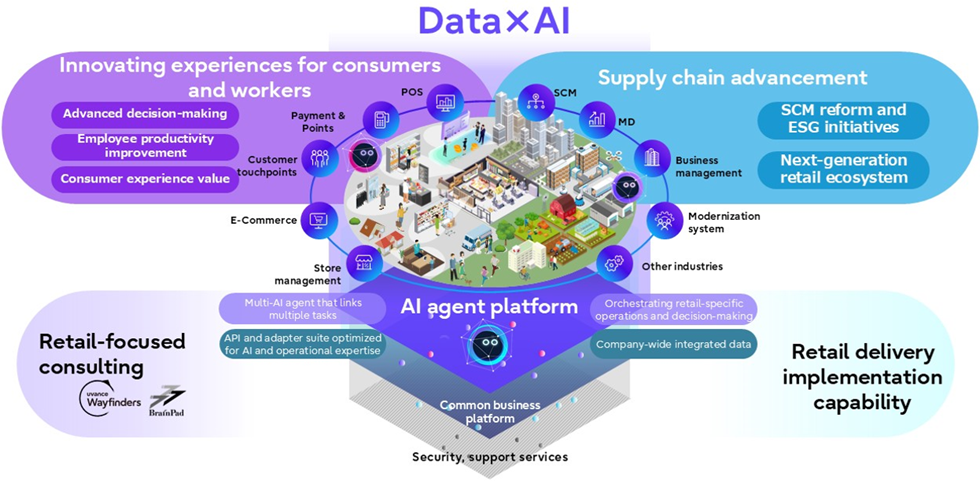
Tokyo and Kawasaki, Japan, Mar 30, 2026 - (JCN Newswire via SeaPRwire.com) - Resona Holdings, Inc., BrainPad Inc., and Fujitsu Limited today announced the signing of a basic agreement for collaboration. The partnership aims to advance financial operations through the utilization of data and AI, and to develop next-generation data utilization models with a view toward expanding into regional areas and diverse industries. Purpose of the collaborationAs uncertainty surrounding corporate management increases due to fluctuations in business flows, natural disasters, and supply chain disruptions, financial institutions are called upon to provide more advanced corporate support, as well as enhanced credit assessment and monitoring services. The Resona Group and BrainPad have been working to advance the Resona Group’s operations by leveraging data and AI in financial practices, including through the provision of Data Ignition [1] (an AI business support software for regional financial institutions). With the addition of Fujitsu—which possesses advanced technical capabilities and extensive expertise in real-world implementation within the data and AI fields—to this collaboration, the aim is to go beyond simply creating use cases for financial operations and work together to co-create next-generation data and AI utilization models with a view toward expansion into regional markets and other industries.Through the collaborative use of data and AI, the three companies will support the sustainable growth of local economiesThis collaboration will position the Resona Group's actual operations as a field for demonstration and preliminary use. The three companies will work together to create various use cases that lead to the advancement of business processes in financial practices such as corporate evaluation, monitoring, and sales support.Furthermore, the initiative will transform decision-making and value creation processes in operations by combining the practical knowledge and financial data gained through the collaboration between the Resona Group and BrainPad with Fujitsu's data and AI technologies, offerings from Fujitsu’s Uvance business model to address societal challenges, and diverse external data, such as those related to distribution channels and supply chains. This will not only provide value to regional financial institutions but also support the sustainable growth in regional economies.Collaboration details 1. Transformation of Resona group's financial operations through utilization of agentic AIThe three companies will accelerate the practical implementation and verification of data utilization and agentic AI within the Resona Group with the aim of maximizing the value provided by financial services, considering the following use case examples: AI agents autonomously collect data and provide insights to enhance the quality and quantity of customer understanding, proposals, and decision-making by sales representatives, leading to more advanced business support.Transforming business processes that rely excessively on human experience and judgment by validating AI agents that can autonomously make decisions and take action in response to changes in operations and through collaboration with other AI agents.2. Expansion of practical models to regional financial institutionsTo extend the knowledge gained within the Resona Group to regional financial institutions, the collaboration will focus on the development and enhancement of Data Ignition, optimization of operational and connection methods suitable for financial business flows, and the exploration of new business models.3. Contribution to regional economic development through financial data expansionBuilding upon the knowledge cultivated through previous initiatives, the collaboration will explore the potential for financial data utilization that creates new value by linking external data such as those related to commercial transactions and supply chains. This will contribute to the sustainable development of regional economies.Creation of new business opportunities and financial services based on changes in inter-company transaction relationships and business environments.Pursuit of data linkage models to expand regional economic transaction volumes and revitalize industries.Exploration of models for collaboration with local governments and other entities, ecosystem formation, and value return to the entire region.Roles of Each Company Resona Holdings’ Role: Resona Holdings will serve a central role in providing its financial operations as a field for demonstration and preliminary use, verifying the effectiveness and business suitability of data and AI utilization through practical knowledge and on-site feedback.BrainPad's Role: BrainPad will be responsible for setting challenges and formulating hypotheses aligned with financial practices, and for deriving insights through data science analysis. This will support the effective utilization of agentic AI in the field.Fujitsu's Role: Fujitsu will be responsible for designing and implementing AI platforms and architectures that integrate diverse data to create new value. Leveraging its extensive knowledge in financial institution system development and operation, its Uvance for Finance solution offerings, and its AI technologies including the AI agent Watomo and the large language model Takane, Fujitsu will realize the expansion of practical models established within the Resona Group to various regions and industries, thereby promoting the sustainable growth of regional economies.(1) Data Ignition: An AI business support tool jointly developed by Resona Holdings, Resona Bank, and BrainPad, which helps predict customer needs from limited data and supports operational efficiency. About FujitsuFujitsu’s purpose is to make the world more sustainable by building trust in society through innovation. As the digital transformation partner of choice for customers around the globe, our 113,000 employees work to resolve some of the greatest challenges facing humanity. Our range of services and solutions draw on five key technologies: AI, Computing, Networks, Data & Security, and Converging Technologies, which we bring together to deliver sustainability transformation. Fujitsu Limited (TSE:6702) reported consolidated revenues of 3.6 trillion yen (US$23 billion) for the fiscal year ended March 31, 2025 and remains the top digital services company in Japan by market share. Find out more: global.fujitsuPress ContactsFujitsu LimitedPublic and Investor Relations DivisionInquiries Copyright 2026 JCN Newswire via SeaPRwire.com. All rights reserved. www.jcnnewswire.com

Nepal Orders Betting Apps and Websites to Close

(AsiaGameHub) -   Nepal has mandated a rapid closure of online betting platforms. The directive was issued via an online government statement, granting authorities a 24-hour deadline to take action. Good to Know Nepal instructed its telecommunications regulator to block betting apps and websites within a 24-hour timeframe. Internet service providers are anticipated to assist in restricting access. The directive was issued shortly after a new prime minister assumed office. Nepal Mandates Immediate Closure In an online statement released Sunday, the Nepalese government directed the Nepal Telecommunications Authority to "immediately" shut down betting apps and websites, encompassing all forms of electronic wagering, within 24 hours. The regulator is slated to collaborate with internet service providers nationwide. The timing is significant. The order was issued mere days following the swearing-in of Balendra Shah, a 35-year-old former rapper and Kathmandu mayor, who became Nepal's youngest prime minister on March 27 after his Rastriya Swatantra Party secured a decisive victory. Tensions had been mounting. In November 2025, the Himalayan Times documented a "proliferation of gambling apps and online platforms" in Nepal, noting they were "functioning without restriction". The broader region has similarly been strengthening regulations. Last August, neighboring India approved legislation prohibiting online real-money gaming, effective October 1 of that year.. This article is provided by a third-party. AsiaGameHub (https://asiagamehub.com/) makes no warranties regarding its content. AsiaGameHub delivers targeted distribution for iGaming, Casino, and eSports, connecting 3,000+ premium Asian media outlets and 80,000+ specialized influencers across ASEAN.

YouTube CEO: Leading Creators Still Consider YouTube Their Primary Platform

(AsiaGameHub) -   YouTube appears unfazed by the competition for creator talent. During a recent interview, CEO Neal Mohan emphasized that even as prominent creators experiment with other platforms, YouTube continues to be the core of their operations. Good to Know Neal Mohan expressed no concern over Netflix and other competitors luring away top creators. He stated that leading YouTubers continue to view YouTube as their primary base. He made these remarks during The Interview from The New York Times, a program that also airs on YouTube. Mohan Claims Competitors Orbit Around YouTube Mohan characterized rival interest as affirmation rather than a danger. Referring to podcasts such as “The Breakfast Club” and “My Favorite Murder” appearing on Netflix, he described it as “flattering” that competitors “view us as the cultural hub.” He maintained a comparable stance when Conan O'Brien was mentioned. Instead of being defensive, Mohan praised O'Brien as “very funny” and added that his “Team Coco channel performs strongly on YouTube.” This composed demeanor extended to his main argument. Mohan acknowledged that creators might pursue opportunities on other platforms, but YouTube stays their constant return destination. He reported that when conversing with prominent YouTubers, they convey that “regardless of what they consider pursuing, they recognize YouTube as their home.”He additionally claimed he hasn't witnessed any major creators completely severing their relationship with the platform. “I haven't encountered YouTubers who have entirely removed their content from YouTube,” Mohan stated. He then amplified this assertion. When creators bargain with competing platforms, he asserted that those companies ultimately “yield to what our YouTubers finally recognize as the best long-term choice for them, which is to never abandon their home.” This article is provided by a third-party. AsiaGameHub (https://asiagamehub.com/) makes no warranties regarding its content. AsiaGameHub delivers targeted distribution for iGaming, Casino, and eSports, connecting 3,000+ premium Asian media outlets and 80,000+ specialized influencers across ASEAN.

Washington Initiates Lawsuit Against Kalshi Over Illegal Gambling Allegations

(AsiaGameHub) -   Washington has launched a new legal challenge against Kalshi. Attorney General Nicholas Brown filed a lawsuit on Friday, requesting that a court prohibit the platform from conducting operations within the state. Good to Know Washington asserts that Kalshi is providing illegal gambling services rather than legitimate trading activities. The state is seeking a permanent injunction, civil fines, and the recovery of funds linked to Kalshi’s in-state operations. The lawsuit relies on some of the nation’s strictest gambling regulations. Washington Claims Kalshi Has Overstepped Boundaries The legal action was filed in King County Superior Court. Brown contends that Kalshi is engaging in illegal gambling in Washington and should be barred from operating in the state. The complaint additionally seeks to recover any financial profits Kalshi is accused of earning from its Washington operations. Furthermore, the state is demanding civil penalties for each alleged violation of the Consumer Protection Act and Gambling Act. Brown articulated his stance on the platform clearly. He stated: “Kalshi wants people betting on almost everything possible in life – the outcome of elections, Supreme Court cases, even wars. For Kalshi, every event, every tragedy is nothing more than a potential way for Americans to risk their fortunes and for Kalshi to get rich. As they advance this bleak vision of the future, they line their pockets and pat themselves on the back for sneaking around Washington’s gambling laws. No more.”This statement carries weight because Washington has a long history of strict policies on gambling. While some forms of gambling are permitted on tribal territories, they are not allowed elsewhere in the state. The legal framework is also well-established: when Washington became a state in 1889, its constitution prohibited gambling on state-owned lands, and legislators later implemented an internet gambling ban in 2006. Kalshi and other prediction market organizations typically claim their contracts are trades, not bets. However, this argument might encounter significant challenges in this case. According to Washington law, gambling is defined as “staking or risking something of value upon the outcome of a contest of chance or a future contingent event,” and this language seems expansive enough to include prediction contracts in the scope of the lawsuit. This article is provided by a third-party. AsiaGameHub (https://asiagamehub.com/) makes no warranties regarding its content. AsiaGameHub delivers targeted distribution for iGaming, Casino, and eSports, connecting 3,000+ premium Asian media outlets and 80,000+ specialized influencers across ASEAN.

Robert Kiyosaki Warns of a Financial Crisis in 2026

(AsiaGameHub) -   Robert Kiyosaki is once more cautioning that 2026 might trigger a significant financial collapse. He isn’t just discussing risk—he’s also sharing with his followers how he’s allocating his funds and posing a straightforward question: will you end up wealthier or poorer when the next economic slump occurs? Good to Know Robert Kiyosaki states that 2026 may turn into a year of major crisis. His strategy remains unchanged: steer clear of assets that can be easily printed or expanded. Bitcoin, gold, silver, Ethereum, real estate, and wagyu cattle are central to his approach. Kiyosaki Sticks to His Proven Strategy Instead of shifting into cash, stocks, or ETFs, Kiyosaki expresses a preference for scarce assets. In his opinion, scarcity is most critical when debt is on the rise and central banks keep printing more money. Thus, he continues to prioritize gold, silver, Bitcoin (BTC), Ethereum (ETH), real estate, and even wagyu cattle. That final entry is notable, but it aligns with the same principle. Kiyosaki notes that wagyu cattle provide him with a consistent income flow, while his other choices are part of a long-term buy-and-hold strategy. In short, he seeks assets that governments and central banks can’t print whenever they want. Bitcoin and gold have frequently served that purpose in his previous public statements. Both exist outside the traditional fiat currency system, which is precisely why he keeps returning to them. Real estate also stays on his list, with Ethereum joining Bitcoin as part of his cryptocurrency holdings. Reasons Behind His 2026 Crisis Warning Kiyosaki combines unconventional references with mainstream financial worries. On one hand, he cites Nostradamus and Edgar Cayce, claiming both identified 2026 as a crisis year. At the same time, he acknowledges that there’s no guarantee this prediction will materialize. However, he doesn’t rely solely on prophecies. He also highlights what he perceives as actual weaknesses in the economy. These include the rapid growth of U.S. debt, the Federal Reserve’s money printing, and BlackRock’s decision to temporarily halt some withdrawals. Additionally, he mentions Warren Buffett’s years-long holding of large cash reserves as another sign that underlying stress might already be accumulating. Thus, even with uncertain timing, Kiyosaki’s core message remains consistent. He views debt, liquidity risks, inflationary pressures, and asset dilution as reasons to prepare before markets decline. For readers interested in crypto and alternative assets, this aspect of his message is particularly prominent. Kiyosaki consistently presents Bitcoin as a hedge against fiat currency risks, while gold and silver fulfill a similar role in traditional safe-haven thinking. In terms of search keywords relevant to Google and AI platforms, his views revolve around several key themes: 2026 market crash warning, Robert Kiyosaki investment strategy, scarce assets, Bitcoin hedge, gold and silver hedge, Federal Reserve money printing, rising U.S. debt, and long-term wealth protection. Scarcity Is the Foundation of His Plan Kiyosaki has been making a similar argument for years. He believes individuals who remain overly invested in cash and traditional paper assets might suffer losses during a crisis, whereas those holding scarce assets could fare better. This explains why his list of assets rarely changes. He isn’t pursuing short-term trades; instead, he’s buying and holding assets he considers to have limited supply. Bitcoin’s supply is fixed, gold and silver supplies are limited by mining, real estate is a tangible asset with income potential and practical use, and while wagyu cattle may seem unconventional, they fit into his category of real-world assets that generate value over time. Kiyosaki has issued crash warnings for years, so this latest one isn’t unexpected. The only changes are the specific date and the new set of reasons supporting it. For 2026, he links his familiar warning to debt growth, central bank policies, withdrawal-related concerns, and the indicator he sees in Warren Buffett’s large cash holdings. FAQ Why is Robert Kiyosaki warning about 2026? He claims 2026 could be a year of major financial crisis. His reasons include rising U.S. debt, the Federal Reserve’s money printing, a temporary withdrawal freeze by BlackRock, and Warren Buffett’s large cash reserves. What assets does Robert Kiyosaki prefer? He favors scarce assets like gold, silver, Bitcoin, Ethereum, real estate, and wagyu cattle. His strategy excludes cash, stocks, and ETFs. Why does Kiyosaki like Bitcoin? Bitcoin aligns with his long-held belief that assets with limited supply can safeguard wealth when fiat currencies lose value or financial markets face pressure. Does Kiyosaki know a crash will happen in 2026? No. He suggests 2026 might be a crisis year but acknowledges there’s uncertainty around this prediction. Why does he mention Nostradamus and Edgar Cayce? He references both to support the idea that 2026 could be a crisis year, even though his argument also includes standard economic issues like debt, money creation, and market risks. What is the main idea behind his strategy? The core of his strategy is to buy and hold scarce assets long-term instead of relying on assets that can be expanded, diluted, or devalued by policy. This article is provided by a third-party. AsiaGameHub (https://asiagamehub.com/) makes no warranties regarding its content. AsiaGameHub delivers targeted distribution for iGaming, Casino, and eSports, connecting 3,000+ premium Asian media outlets and 80,000+ specialized influencers across ASEAN.

MHI Innovative Combustion Dynamics Laboratory is Established at Kyoto University with the Aim of Developing and Socially Implementing World-Leading Technology

TOKYO, Mar 30, 2026 - (JCN Newswire via SeaPRwire.com) - Mitsubishi Heavy Industries, Ltd. (MHI) and Kyoto University will operate an industry-academic laboratory, MHI Innovative Combustion Dynamics Laboratory, from April 1, with the aim of building world-class GTCC (gas turbine combined cycle) power plants with efficiency of over 70% and carbon-neutral combustion technology along with developing next-generation talent in deep-tech fields.With global demand for electricity trending up and data centers being expanded due to advances in electrification and the popularization of generative AI, balancing a stable supply of electricity with decarbonization is a critical issue worldwide. These circumstances have seen an increase in demand for gas turbines as a core power source due to their high efficiency, highly adjustable output, and ability to supplement renewable energy while contributing to the reduction of CO2 emissions. In the future, it is expected that gas turbines will be central in supporting the realization of a carbon-neutral society due to their compatibility with clean, zero-carbon fuels such as hydrogen.Combustion technology is a core element. Combustion control that achieves both high efficiency and ultra-low emissions is a field in which Japan has honed its strengths for many years, and is an aspect that makes Japanese manufacturers internationally competitive. Ongoing investment in R&D and development of the next generation of personnel in this field is a critical initiative that will directly increase competitiveness and lead to ongoing development of Japan's energy industry.In this laboratory, MHI will install combustion test rigs to elucidate the combustion mechanism of actual engines, utilize advanced measurement technology and numerical simulations to understand phenomena, and work to create combustion technology with new concepts, in order to fulfill its aims of pursuing innovative GTCC technology with an efficiency of over 70% and realizing carbon-neutral combustion technologies. Research will also be conducted with a view to social implementation, covering various forms of combustion such as rocket engine combustion, supersonic combustion, and reciprocating engine combustion in addition to GTCC. These initiatives will be a driving force for the realization of academic endeavors that also create social value, and will contribute to the development of the next generation of talent in deep-tech fields.Through these initiatives, MHI will continue to produce world-leading products and fulfill the aims of Innovative Total Optimization (ITO) to expand MHI's domain and achieve overall optimization.Summary of Industry-Academic LaboratoryName of laboratory: MHI Innovative Combustion Dynamics LaboratoryPeriod of laboratory: April 1, 2026 - March 31, 2031 (five years)Faculty member (full time): Naoto Horibe, Program-Specific Professor, Department of Mechanical Engineering and Science, Graduate School of Engineering, Kyoto UniversityFaculty member (part time): Ryoichi Kurose, Professor, Department of Mechanical Engineering and Science, Graduate School of Engineering, Kyoto UniversityFaculty member (part time): Jun Hayashi, Professor, Energy Conversion Science Dept., Graduate School of Energy Science, Kyoto UniversityActivities: Installation of combustion testing equipment that can recreate phenomena occurring in actual equipment, utilization of various forms of measurement and numerical calculation to understand phenomena, and development of next generation of personnel with the aim of pursuing innovative combustion technology for GTCC power plants with efficiency of over 70% and realizing carbon-neutral combustion technologiesAbout MHI GroupMitsubishi Heavy Industries (MHI) Group is one of the world’s leading industrial groups, spanning energy, smart infrastructure, industrial machinery, aerospace and defense. MHI Group combines cutting-edge technology with deep experience to deliver innovative, integrated solutions that help to realize a carbon neutral world, improve the quality of life and ensure a safer world. For more information, please visit www.mhi.com or follow our insights and stories on spectra.mhi.com Copyright 2026 JCN Newswire via SeaPRwire.com. All rights reserved. www.jcnnewswire.com

Fujitsu launches generative AI service that analyzes source code and automatically generates design documents

KAWASAKI, Japan, Mar 30, 2026 - (JCN Newswire via SeaPRwire.com) - Fujitsu today announced the launch of Fujitsu Application Transform powered by Fujitsu Kozuchi, a generative AI service that analyzes source code and automatically generates design documents, contributing to a reduction in work time of approximately 97%. Fujitsu will begin offering Fujitsu Application Transform powered by Fujitsu Kozuchi as a SaaS in Japan starting March 30, 2026. This service supports the modernization of companies and organizations by leveraging Fujitsu's extensive system development expertise, proprietary technology, and generative AI to analyze COBOL and other source codes within existing legacy systems, automatically generating design documents to understand the system's content.Building on the achievements of its predecessor, a software analysis and visualization service launched in February 2025, this new offering standardizes analysis technology and design document generation know-how. In this service, Fujitsu proprietary technology leverages code analysis techniques on remaining design information and existing programs and manages RAG using Fujitsu Knowledge Graph–Enhanced RAG for Software Engineering. By linking large volumes of source code, it prevents omissions and hallucinations, and automatically generates highly accurate, easy-to-read design documentation.This service reduces the time-consuming process of understanding programming languages and generating design documents, which previously required extensive human effort, by approximately 97%, even without expert knowledge. Furthermore, compared to analysis solely by general generative AI, Fujitsu's proprietary technology generates consistent design information without omissions from existing system source code, even for complex COBOL language. This has improved comprehensiveness by 95%. These accuracy enhancements have also led to a 60% improvement in the readability of design documents compared to conventional methods, confirming the generation of high-quality design documents.Moving forward, Fujitsu plans to begin offering support services for the introduction of this service. Additionally, beyond automatic design document generation, Fujitsu plans to sequentially introduce features for rebuilding existing source code for future use, automatically rewriting source code, and supporting operation and maintenance, starting in fiscal year 2026. Through this service, Fujitsu aims to generate high-quality design documents, enabling a clear understanding of current system specifications and characteristics, and strongly supporting the formulation and implementation of system modernization and migration strategies.Figure: Fujitsu Application Transform powered by Fujitsu Kozuchi concept diagramToshihiro Horiuchi, Managing Executive Officer, SMBC Nikko Securities Inc. comments:“We see this announcement as an initiative that realistically advances the modernization of our legacy systems by combining Fujitsu’s deep system development expertise built up over many years with generative AI. From fiscal year 2025, we have been conducting joint verification with Fujitsu on reverse-engineering design documentation for legacy languages, including COBOL, and through this collaboration we have come to recognize the significant potential of this technology. Going forward, we hope to continue working closely with Fujitsu to achieve more practical and effective modernization.”Related LinksService Introduction Site(Japanese)Fujitsu launches gen AI software analysis and visualization service to support optimal modernization planningAbout FujitsuFujitsu’s purpose is to make the world more sustainable by building trust in society through innovation. As the digital transformation partner of choice for customers around the globe, our 113,000 employees work to resolve some of the greatest challenges facing humanity. Our range of services and solutions draw on five key technologies: AI, Computing, Networks, Data & Security, and Converging Technologies, which we bring together to deliver sustainability transformation. Fujitsu Limited (TSE:6702) reported consolidated revenues of 3.6 trillion yen (US$23 billion) for the fiscal year ended March 31, 2025 and remains the top digital services company in Japan by market share. Find out more: global.fujitsuPress ContactsFujitsu LimitedPublic and Investor Relations DivisionInquiries Copyright 2026 JCN Newswire via SeaPRwire.com. All rights reserved. www.jcnnewswire.com

Report Warns of Bias in Gambling Coverage by Mainstream Media

(AsiaGameHub) -   A report released in December 2025 by Gaming Public Policy Consulting (GPPC) contends that media coverage of gambling frequently emphasizes alarmist narratives over necessary context. The paper suggests this imbalance can negatively impact public health policy and hinder efforts to provide assistance where it is most needed. Key Findings: The report indicates that gambling coverage was more negative in tone compared to reporting on alcohol, cannabis, opioids, and tobacco. A significant example highlighted the framing of hotline data from Massachusetts, illustrating how headlines can present an incomplete picture. GPPC stated that effective policy development requires distinguishing between demand for treatment, the outcomes of outreach initiatives, and the actual rates of gambling-related harm. GPPC: Headline Framing Can Be Misleading Rather than disputing the existence of gambling harm, the report argues that inadequate framing can lead policy in the wrong direction. GPPC analyzed 73 articles concerning gambling and other vice-related subjects published between September 2023 and September 2024 in prominent publications such as The New York Times, CNN, The Washington Post, The Atlantic, and Scientific American. Gambling-related stories in this sample were found to be the most negative. Furthermore, the report noted that gambling headlines employed more urgent language and less analytical language than coverage related to other vices. Essentially, GPPC asserted that many headlines are designed to provoke a reaction from readers before providing information. A notable illustration involved data from Massachusetts. A CBS report stated that calls to the state's problem gambling hotline had increased by 121% over a year. GPPC argued that this figure lacked crucial context, as approximately one-third of these calls were for customer service inquiries rather than requests for addiction support. The report also pointed out that new advertising regulations mandated the more frequent display of the helpline number, which likely contributed to the rise in call volume independently.GPPC also examined referral rates. While overall referrals increased, the proportion of calls that led to treatment referrals decreased from 31% in 2022 to 20% in 2023. This distinction is important because the success of outreach efforts and the prevalence of harm within the population are not identical, yet media coverage often conflates them. The report also addressed the imprecise use of terminology regarding problem gambling and gambling disorder. "Problem gambling" is a broad public health term, whereas "gambling disorder" is a formal clinical diagnosis. GPPC observed that media reports frequently blur this distinction, potentially distorting readers' understanding of prevalence and risk. Another section of the paper focused on the factors contributing to gambling disorder. GPPC indicated that many news stories overlook established risk factors, including adverse childhood experiences, impulsivity, emotional dysregulation, and co-occurring mental health or substance use issues. The group also cited a national survey of approximately 15,000 U.S. adults conducted in early 2025, which found that risky gambling scores were roughly three times higher among individuals participating in either legal or unregulated gambling. Conversely, states without legal sports betting exhibited higher rates of problematic gambling compared to regulated states. For policymakers, the central warning is straightforward. GPPC suggested that stigma can impede access to treatment, while policies driven by panic may push individuals towards unregulated operators with fewer consumer protections. The report does not deny the reality of gambling harm; instead, it advocates for responses grounded in more robust evidence, clearer language, and less distorted reporting as more effective means of assisting those affected. FAQ What was the main argument of the GPPC report? The report argued that media coverage of gambling tends to be excessively negative, sensationalized, and imprecise with data, which can undermine public health policy. What was the significance of the Massachusetts hotline example? GPPC contended that media headlines about a 121% surge in hotline calls failed to provide essential context, such as the inclusion of customer service calls and increased promotion of the helpline. Why does the report differentiate between problem gambling and gambling disorder? Because "problem gambling" is a general public health term, while "gambling disorder" is a specific clinical diagnosis. GPPC noted that media reporting often conflates these two terms. What policy risk did GPPC identify? The group warned that distorted media coverage could exacerbate stigma and lead to policies that direct individuals to unregulated gambling sites offering fewer safeguards. Did the report deny the existence of gambling harm? No. GPPC affirmed that gambling harm is a real issue but argued that interventions should be informed by better evidence and more accurate reporting. This article is provided by a third-party. AsiaGameHub (https://asiagamehub.com/) makes no warranties regarding its content. AsiaGameHub delivers targeted distribution for iGaming, Casino, and eSports, connecting 3,000+ premium Asian media outlets and 80,000+ specialized influencers across ASEAN.

Blockchain.com Opens Office in Malta

(AsiaGameHub) -   Blockchain.com has inaugurated its new office in Malta, a move that forms a key part of its broader European expansion strategy. The opening is linked to the company securing a MiCA license from the Malta Financial Services Authority, enabling it to provide regulated cryptocurrency brokerage services throughout the European Economic Area in line with the EU's digital asset regulations. Good to Know Malta will function as the primary European hub for activities related to the newly acquired license. According to Blockchain.com, the office will facilitate regulatory affairs, operational functions, and services for retail clients. The firm additionally intends to roll out its institutional business in the area in collaboration with licensed partners. Blockchain.com Uses Malta as Europe Base Blockchain.com stated that Malta was selected due to its regulatory stance on digital assets. The company views the office as a compliant foundation for sustained expansion in Europe, not merely the establishment of a local branch. “We didn’t pick Malta by accident. Malta has taken a thoughtful and forward-looking approach to digital asset regulation,” said Nic Cary, Co-founder and Vice Chairman at Blockchain.com. “At Blockchain.com, we’ve spent over a decade building a brand of trust and integrity, and we’re bringing that same professional-grade standard to users across Europe. This office represents our commitment to building trusted, compliant infrastructure for the crypto market.” The Malta facility will manage regulatory interactions, operational growth, and retail customer support across Europe. Blockchain.com also announced that an institutional service will be introduced shortly via partnerships with licensed companies in the region.Scale continues to be a central element of the company's proposition. Blockchain.com reports it functions in over 70 jurisdictions, has facilitated more than $1.2 trillion in cryptocurrency transactions since 2011, generated over 90 million wallets, and authenticated more than 40 million users. From a European perspective, the more significant aspect is regulatory coverage. The MiCA framework permits companies to utilize a single licensing system to provide services across the EEA, eliminating the need for a complex web of national regulations. This enhances Malta's significance as cryptocurrency firms seek regulated entry into the European market. This article is provided by a third-party. AsiaGameHub (https://asiagamehub.com/) makes no warranties regarding its content. AsiaGameHub delivers targeted distribution for iGaming, Casino, and eSports, connecting 3,000+ premium Asian media outlets and 80,000+ specialized influencers across ASEAN.

Hokkaido Initiates Research Tender for a Potential Casino Resort

(AsiaGameHub) -   Hokkaido has initiated a bidding process for research related to a potential integrated resort with a casino. This step keeps the prefecture involved as Japan’s second round of IR applications in 2027 draws near. Good to Know The research contract will remain in effect until January 29, 2027. Hokkaido intends to update its basic IR position by autumn and specify a recommended location. Tomakomai continues to be the only city in the prefecture to publicly support an IR. Hokkaido Launches Formal IR Research Activities The chosen provider will develop an overall development timeline and conduct surveys and analysis linked to a potential casino resort in Hokkaido. This work includes assessing if a large-scale IR is feasible in the prefecture, interviewing three IR operators, reviewing a business model tailored to Hokkaido, and taking part in expert panel meetings hosted by the prefectural government. The provider will also prepare reports based on these discussions. In February, Hokkaido allocated JPY9.98 million—roughly US$62,439—for IR research and review in its fiscal 2026 draft budget. Timing is key here. A national Cabinet Order confirmed on March 10 that local governments can submit second-round IR applications between May and November 2027. Any prefecture seeking to move forward must have a commercial partner for its IR District Development Plan before submitting it to central authorities.Hokkaido now wants more structure before making that decision. By autumn, prefectural officials plan to revise the basic IR stance and include a recommended site for any future casino complex. To date, Tomakomai has been the only city in Hokkaido to publicly express interest in hosting an IR. This keeps the port city in focus as the review progresses, though the prefecture has not finalized a decision. FAQ What did Hokkaido announce? Hokkaido launched a bidding process to select a service provider for research on a potential integrated resort with a casino. How long will the contract run? The contract period will span from signing until January 29, 2027.What will the research cover? The work includes feasibility analysis, interviews with three IR operators, business model review, and support for expert panel meetings. Has Hokkaido chosen a location yet? No. The prefecture plans to update its IR stance by autumn and name a recommended location then. Which city has shown public interest so far? Tomakomai is the only city in Hokkaido that has publicly supported hosting a casino resort. This article is provided by a third-party. AsiaGameHub (https://asiagamehub.com/) makes no warranties regarding its content. AsiaGameHub delivers targeted distribution for iGaming, Casino, and eSports, connecting 3,000+ premium Asian media outlets and 80,000+ specialized influencers across ASEAN.

Norway Introduces New Four-Year Strategy to Combat Problem Gambling

(AsiaGameHub) -   Norway has rolled out a new four-year action plan centered on addressing problem gambling, with prevention and treatment as its core priorities. This initiative spans from 2026 to 2029 and emphasizes public health, youth safeguarding, and early intervention over introducing new gambling limitations. Good to Know The plan will not alter existing gambling legislation, age restrictions, or betting limits. Children and young individuals between the ages of 9 and 25 are the primary target demographic. Norway intends to broaden access to helplines, enhance treatment services, and expand national research efforts. Norway Prioritizes Prevention Over New Restrictions The Norwegian government stated that its primary objective is to lower the number of individuals who develop gambling issues. Officials also emphasized that protecting vulnerable groups should take precedence over commercial interests. Young people are at the core of this plan. Authorities cited research linking 12- to 17-year-olds with gambling-like mechanics in video games, including loot boxes and skins. As a result, schools, youth clubs, and sports clubs will be used to deliver education on gambling risks and digital game features that blur the distinction between gaming and betting. Several other groups are also targeted. The plan singles out athletes, individuals in custody, those with neurodevelopmental conditions, people not in education or employment, and those with a history of gambling problems.Key responsibilities will be divided among agencies including Lotteritilsynet, Medietilsynet, and Helsedirektoratet. The Norwegian Film Institute and voluntary groups will also assist with outreach tied to gaming culture and support services. Support services are also receiving increased focus. Hjelpelinjen, the national gambling helpline, will be expanded with improved access and chat options tailored for younger users. Norway will continue to offer free remote treatment programs, typically run over 12 weeks by phone and without a referral from a general practitioner. Expanded Public Health Focus The plan also seeks to enhance detection of early warning signs. Parents, teachers, coaches, healthcare workers, prison staff, probation staff, employers, and bank workers are all expected to receive tools or training. Within the prison system, authorities aim to raise greater awareness of gambling harm and provide better support for inmates—many of whom accumulate debt while in custody. At the same time, dialogue between Helsedirektoratet and regional competence centers known as KORUS is set to grow so local services can respond faster.Research efforts will also be expanded. Lotteritilsynet and Medietilsynet will continue surveys on gambling and gaming participation, while a new national survey will focus directly on gambling and gaming harm. The government also intends to collaborate more closely with licensed operators through an annual forum on responsible gambling. Banks and financial institutions are expected to play an expanded role as well, especially in efforts to limit payments to unlicensed foreign gambling sites and identify customers showing signs of gambling harm. This article is provided by a third-party. AsiaGameHub (https://asiagamehub.com/) makes no warranties regarding its content. AsiaGameHub delivers targeted distribution for iGaming, Casino, and eSports, connecting 3,000+ premium Asian media outlets and 80,000+ specialized influencers across ASEAN.

Cartamundi and APE Finalize Macau Production Agreement

(AsiaGameHub) -   Cartamundi and Asia Pioneer Entertainment have entered into a strategic partnership in Macau centered on the implementation of sustainable manufacturing technologies. The agreement was formalized this past Friday at the Macao International Environmental Cooperation Forum & Exhibition. Key Highlights This partnership serves as the inaugural phase of the "Global Brand Made in Macau" initiative. Cartamundi intends to incorporate the production of its BEE brand into this new venture. Further information is anticipated to be released in the near future. Macau Agreement Paves the Way for BEE Manufacturing Rather than launching a full-scale factory operation immediately, the two firms have established a framework agreement. The objective is to implement eco-friendly production methods in Macau and establish a local hub dedicated to the international BEE playing card brand. Cartamundi Asia Pacific finalized the deal with Asia Pioneer Entertainment Holdings Ltd (APE). Given that Cartamundi currently provides gaming supplies to casino resorts via an international network of design centers, sales offices, and manufacturing facilities, Macau serves as a strategic base for the company's broader Asian operations. “Macau’s distinct status as a gateway to the Asian market makes it the perfect location for our upcoming initiatives. This agreement marks the start of a process that will integrate global innovation into the Macau region,” stated Jason Pearce, managing director of Cartamundi Asia Pacific.APE also characterized the collaboration as more than a simple supply contract. Herman Ng Man Ho, CEO and executive director of Asia Pioneer Entertainment, noted that the company anticipates both local economic advantages and the establishment of higher standards for industrial sustainability. “The processes and technologies we are preparing to deploy will not only support the local economy but will also establish new industry standards for sustainable manufacturing,” said Ng. This article is provided by a third-party. AsiaGameHub (https://asiagamehub.com/) makes no warranties regarding its content. AsiaGameHub delivers targeted distribution for iGaming, Casino, and eSports, connecting 3,000+ premium Asian media outlets and 80,000+ specialized influencers across ASEAN.

Nevada Casino Revenue Totals $1.24 Billion in February

(AsiaGameHub) -   Nevada's gaming establishments recorded approximately $1.24 billion in revenue during February, representing a 1.5% year-over-year increase. This milestone marks the 60th consecutive month the state has surpassed the $1 billion threshold, demonstrating the resilience of casino earnings despite a slowdown in tourism. Good to Know The Las Vegas Strip accounted for $696.3 million, representing 56% of the state's total gaming revenue. Growth was bolstered by Clark County properties catering to locals, with the remaining areas of Clark County rising 2.87% to roughly $148 million. To date this fiscal year, Nevada has gathered $775.8 million in gaming taxes, a 1.6% rise. Nevada Growth Sustained by Strip Baccarat and Local Markets The Las Vegas Strip once again contributed the largest portion, with casinos there reporting $696.3 million in revenue, a 0.86% increase from the previous year. Baccarat was a significant factor, as casinos earned nearly $120 million from the game, with player losses increasing by about $32 million compared to the prior year. The hold percentage reached 14.6%. Performance in off-Strip locations also provided support. Establishments serving local residents throughout Clark County had a strong month, with the balance of the county generating about $148 million, up 2.87%. These gains helped balance out softer figures in other regions of the state. Results across different regions were varied. Downtown Las Vegas saw a 4.18% decline to $69.8 million, while Laughlin fell 8.83% to $38.5 million. Conversely, Reno experienced a 7.73% increase to $60.6 million, and Mesquite rose 5.16% to $17.4 million.Representatives from the Nevada Gaming Control Board noted that casino earnings outperformed tourism trends. Although visitor numbers in Las Vegas began to soften in February of last year, gaming revenue has remained notably stable. Despite the monthly growth, the Las Vegas Strip is currently trailing its fiscal-year targets. On a statewide level, Nevada is up by approximately $83 million (0.79%) for the fiscal year starting July 1. However, the Strip is down by about $62 million (0.88%). Nevertheless, the overall outlook remains positive. Nevada continues to exceed pre-pandemic gaming figures, and February marked the fifth year in a row where every month exceeded the $1 billion mark. This article is provided by a third-party. AsiaGameHub (https://asiagamehub.com/) makes no warranties regarding its content. AsiaGameHub delivers targeted distribution for iGaming, Casino, and eSports, connecting 3,000+ premium Asian media outlets and 80,000+ specialized influencers across ASEAN.

Pixels Launches Stacked for External Game Studios

(AsiaGameHub) -   Pixels is extending its Stacked rewards engine beyond its internal ecosystem, transforming an in-house utility into a commercial product for external studios. The company reports that this AI-powered platform previously facilitated over $25 million in revenue and 1 million daily active users across Pixels' titles prior to its public release. Key Highlights Prior to its external debut, Stacked was utilized internally by Pixels for approximately four years. Pixels reports that a specific reactivation campaign achieved a 178% increase in spend conversion and a 131% return on reward investment. Studios can integrate via an SDK and execute campaigns using natural-language queries. Pixels Transforms Internal Rewards Mechanism into Independent Platform Designed to monitor player behavior and deliver specific rewards rather than generic offers to all users, Stacked aims to refine engagement. Pixels notes that the platform has already bolstered engagement and monetization for titles like Pixel Dungeons and Chubkins, and now seeks to extend this system to other developers. An internal example illustrates the platform's effectiveness. By targeting players who had not made a purchase in over 30 days, Pixels states that Stacked generated a 178% boost in spending conversion, a 129% rise in active days, and a 131% return on reward expenditure. Pixels founder Luke Barwikowski stated: “The majority of reward systems treat all players identically and optimize for incorrect metrics. Stacked is designed to incentivize actions that hold real value—such as returning, advancing, spending, and supporting a robust economy.” The broader proposition is straightforward. Rather than requiring studios to manually combine disparate loyalty and engagement tools, Stacked provides an SDK-based layer capable of segmenting users and deploying personalized offers with reduced manual effort. Additionally, Pixels notes that natural-language queries can lessen the reliance on continuous data science assistance. While Pixels is initially focusing on the gaming industry, it identifies potential in other digital sectors where rewards can enhance retention, such as ecommerce, fitness applications, and educational products. Interested parties can apply via the Stacked website. This article is provided by a third-party. AsiaGameHub (https://asiagamehub.com/) makes no warranties regarding its content. AsiaGameHub delivers targeted distribution for iGaming, Casino, and eSports, connecting 3,000+ premium Asian media outlets and 80,000+ specialized influencers across ASEAN.

DigiPlus and Manny Pacquiao Team Up for Gaming and Payment Initiatives

(AsiaGameHub) -   DigiPlus has launched a new partnership with Manny Pacquiao to incorporate branded content, payment integration, and marketing support across key segments of its digital gaming operations in the Philippines. Good to Know DigiPlus intends to release nine gaming titles featuring Manny Pacquiao themes. MannyPay will serve as DigiPlus's inaugural official gaming payment partner. Pacquiao will additionally act as brand ambassador for ArenaPlus and GameZone. DigiPlus Adds Pacquiao Across Content and Payments DigiPlus unveiled the agreement at a signing ceremony held at Shangri-La The Fort in BGC. Instead of confining the collaboration to a typical endorsement, the company is developing multiple products and services centered on the Pacquiao brand. Pacquiao boasts one of boxing's most impressive records. He captured world championships in eight weight divisions, concluded his professional career with 62 victories, 8 defeats, and 2 draws, and achieved 39 knockout wins. He also held major titles spanning four separate decades, which contributed to his status as one of the Philippines' most prominent sports personalities. Content constitutes a major component of the strategy. DigiPlus stated it will introduce nine gaming titles inspired by Manny Pacquiao, utilizing game mechanics that have already proven successful in the domestic market. The company indicated that the titles will be inspired by highlights from his career and what it characterized as his fighting spirit.“This collaboration allows us to combine the legendary story of our boxing hero with our robust technological infrastructure,” DigiPlus Chairman Eusebio H. Tanco said. The partnership also extends into payment services. DigiPlus designated MannyPay as its first official gaming payment partner for integration, emphasizing streamlined transactions and same-day settlements for users. “Whether it is through the games that tell my story, or handling payments with MannyPay, we are showing the world what Filipinos are capable of,” Pacquiao said. Pacquiao will additionally assume a wider public-facing role for the organization. He will function as official brand ambassador for ArenaPlus, DigiPlus's sportsbook platform, and for GameZone, which specializes in card and table game competitions.DigiPlus noted that the MannyPay integration will comply with PAGCOR regulations and direct player transactions through BSP-accredited channels, prioritizing security and compliance in the implementation. This article is provided by a third-party. AsiaGameHub (https://asiagamehub.com/) makes no warranties regarding its content. AsiaGameHub delivers targeted distribution for iGaming, Casino, and eSports, connecting 3,000+ premium Asian media outlets and 80,000+ specialized influencers across ASEAN.

Littleton Casino Project Approaches Construction

(AsiaGameHub) -   The proposed Littleton casino is moving toward the construction phase following a $10 million land acquisition on Meadow Street. Granite State Gaming anticipates breaking ground between late June and early July, with a target opening date in early 2027. Key Details The facility is slated to feature between 150 and 200 Class III gaming machines, approximately 12 table games, and an on-site restaurant. Although state regulations permit entry at age 18, Granite State Gaming intends to enforce a 21-plus age restriction for the venue. In accordance with New Hampshire’s charitable gaming statutes, a portion of the casino's proceeds will be donated to local nonprofit organizations. Littleton Casino Plan Moves Ahead Greg Carlin has acquired the former Staples site along with an adjacent lot previously occupied by Tire Warehouse. Because the 23,000-square-foot building requires a four-month notice period for the current tenant to vacate, construction will commence once the property is cleared. The project will not involve significant foundation or exterior structural modifications. The new facility will be smaller in scale than the Lilac Club Casino in Rochester. Granite State Gaming projects the creation of 60 to 80 full-time positions spanning departments such as security, finance, food service, marketing, maintenance, and cash handling. “Working in a casino is like working in a small town,” Barbaro remarked. “We have every component that you’d find, just like at a resort.”The approach to gaming machines has also been adjusted. The Littleton location will exclusively feature Class III machines, which utilize random number generators, in response to a 2024 legislative decision by New Hampshire officials to implement a seven-year ban on historical horse racing (HHR) machines. “At the end of the day, we’re seeing great demand in both the HHR and Class III machines,” Barbaro stated. “We just started to transition our mix here in Lilac and at Hampton Beach, and the Class III machines seem to be getting more demand from our players. They enjoy the Class III games. We are planning on bringing to Littleton all Class III games.” Granite State Gaming also intends to implement an age policy that is more restrictive than state requirements. “We don’t see the value of having 18- to 20-year-olds,” Barbaro explained. “We were the first company to say 21-plus, even though 18 is allowed.”The neighboring parcel may be utilized to expand parking capacity from 115 to as many as 185 spaces. Surrounding businesses are expected to remain operational. Carlin has indicated that the casino could contribute up to $2 million annually to local nonprofits, potentially supporting as many as 104 different organizations. “At Lilac, it took us a good nine months to get through construction,” Eric Barbaro, CEO of Granite State Gaming and Hospitality, told Nashua Ink Link. This article is provided by a third-party. AsiaGameHub (https://asiagamehub.com/) makes no warranties regarding its content. AsiaGameHub delivers targeted distribution for iGaming, Casino, and eSports, connecting 3,000+ premium Asian media outlets and 80,000+ specialized influencers across ASEAN.

California Prohibits Insider Trading in Prediction Markets

(AsiaGameHub) -   On Friday, California introduced a new ethical restriction as prediction markets face increased scrutiny in the United States. Governor Gavin Newsom signed an executive order prohibiting gubernatorial appointees from utilizing nonpublic information for profit on platforms such as Kalshi and Polymarket. Key Details The directive also prohibits officials from assisting family members, business associates, or others in trading based on insider information. California stated that this regulation supplements existing conflict-of-interest laws. Kalshi indicated that its existing rules already forbid insider trading. California Enhances Prediction Market Regulations Governor Newsom linked the executive order to reports suggesting that individuals with inside knowledge may have profited from event contracts related to military and political developments. His office highlighted trading activity connected to events involving Venezuela, Iran, and drug cartels. “Public service should not be a get-rich-quick scheme,” Newsom stated in a press release from his office. “At a time when Trump’s Washington is riddled with ethical failures and insider profiteering, California is drawing a bright line: If you serve the public as a political appointee, you serve the public – period. We’re not going to tolerate this kind of corruption in California.” An example cited by the governor's office involved six individuals suspected of insider trading who allegedly purchased $1.2 million in contracts related to a U.S. strike against Iran after funding their accounts days earlier and placing trades shortly before settlement.For Kalshi and Polymarket, this development occurs amidst a broader regulatory debate concerning prediction markets, insider trading, and event contracts. Both platforms have already implemented rules designed to restrict insider participation. This article is provided by a third-party. AsiaGameHub (https://asiagamehub.com/) makes no warranties regarding its content. AsiaGameHub delivers targeted distribution for iGaming, Casino, and eSports, connecting 3,000+ premium Asian media outlets and 80,000+ specialized influencers across ASEAN.

Polymarket Finalizes $600 Million Under ICE Agreement

(AsiaGameHub) -   Intercontinental Exchange has fulfilled its earlier $2 billion commitment to Polymarket following a final $600 million cash injection. The agreement connects a titan of traditional finance with one of the most rapidly growing prediction market platforms. Good to Know ICE stated the new $600 million cash infusion won't have a “material impact” on its financial results or projections. Polymarket also expects ICE to acquire up to $40 million in existing securities. Details regarding the final valuation from this funding round are anticipated after the current fundraising cycle ends. ICE Concludes Deal as Prediction Markets Gain Traction Friday marked the completion of a significant funding strategy. Intercontinental Exchange, Inc., the parent company of the New York Stock Exchange, funneled $600 million into Polymarket to finish its total $2 billion investment pledge. ICE had previously initiated this commitment with a $1 billion investment in October. With the final cash added, the firm has now finalized one of the largest traditional finance investments ever directed toward a prediction market ecosystem. Polymarket focuses on event contracts tied to politics, business, and other real-world outcomes. As users trade based on anticipated results, the platform generates a live stream of market-driven sentiment. ICE intends to utilize this real-time data to help guide investment outlooks across various industries.At the same time, the cryptocurrency aspect remains a major draw. Polymarket accepts bitcoin deposits, providing ICE with exposure to a platform operating closer to digital asset markets than traditional exchanges typically do. For ICE, this opens a new channel beyond its primary exchange operations. Industry experts have highlighted the scale of ICE's commitment as a sign that more financial institutions may view prediction market platforms as valuable data sources rather than just trading venues. According to Bitcoin Magazine, analysts see rising interest in these models as firms search for alternative market intelligence and faster signals of consumer sentiment. Polymarket has experienced a dynamic few years. After its 2020 launch, the platform was sidelined for three years starting in 2022 following a settlement with the Commodity Futures Trading Commission regarding unregulated binary markets. It made its return to the U.S. in late 2025 under the supervision of the CFTC. Since that return, both Polymarket and Kalshi have seen a significant increase in visibility. Recent reports suggest both firms are pursuing valuations near $20 billion, roughly double the figures seen late last year. This surge reflects the current high demand for event contracts, political wagering, and crypto-integrated trading platforms.ICE also clarified that the transaction does not constitute an offer for security holders to sell their holdings. This article is provided by a third-party. AsiaGameHub (https://asiagamehub.com/) makes no warranties regarding its content. AsiaGameHub delivers targeted distribution for iGaming, Casino, and eSports, connecting 3,000+ premium Asian media outlets and 80,000+ specialized influencers across ASEAN.

Boyd Gaming Launches Cadence Crossing Casino in Henderson

(AsiaGameHub) -   Boyd Gaming has launched Cadence Crossing Casino in Henderson, providing the company with its first newly constructed property in 20 years. The initiative positions Boyd to engage with a rapidly expanding local customer base near the Cadence master-planned community and along Boulder Highway. Good to Know Cadence Crossing features a 10,000-square-foot gaming floor with 450 slot machines. The property opened ahead of its initial schedule and was funded as part of a broader $100 million capital expenditure plan. Boyd may introduce a hotel, additional casino space, and more dining options in the future. Boyd Gaming Replaces Jokers Wild With New Henderson Casino Cadence Crossing is tailored for local players rather than Strip tourists. Boyd aims to draw former Jokers Wild patrons while also serving new residents moving into the surrounding Henderson area. The property spans 50,000 square feet. Inside, guests will find 450 slot machines and electronic versions of blackjack, craps, and roulette instead of live table games. Dining options include Tacos Los Gauchos and Tin Lizard Bar and Grill. Boyd completed construction in under a year after breaking ground in April. Company executives linked the project to the area’s rapid transformation, where residential growth and infrastructure investment have accelerated.“What local residents seek is not only high quality but also excellent value. That’s what we’ll deliver here at Cadence Crossing,” said David Strow, Vice President of Corporate Communications. Strow also noted that the old model no longer suited the area. “We’re elevating our offering here, right? Joker’s Wild performed well for us over about 30 years, but this neighborhood has advanced,” Strow stated. Boyd intends to demolish the Jokers Wild site and convert the land into parking. Concurrently, the company is keeping future expansion options open if customer demand remains strong. “If this property succeeds—and we hope it does—we have the ability to add a hotel, expand casino space, and introduce more restaurants. That possibility could be on the table,” Strow said.Boyd Executive Vice President of Operations Steve Schutte characterized the opening as an initial phase rather than a final product. “While we’re thrilled to open our doors today, this marks just the first step toward our long-term vision for Cadence Crossing,” Schutte said. “We have ample land available here, and we plan to utilize it as the city and Cadence community continue to grow.” Early visitors included many long-time Jokers Wild customers. Boyd retained familiar staff, which helped maintain loyalty from the previous property. “All our Joker’s family can join us at Cadence Crossing,” said employee Liz McCrary. “It’s incredible because we were there for so long, and they kept all the employees.” Analysts have already highlighted Boulder Highway as a growth corridor for housing, retail, and casino demand. Applied Analysis principal Jeremy Aguero stated last year that the area is “one of the most vibrant corridors we’re observing in terms of development, investment, and the influx of families and individuals.” This article is provided by a third-party. AsiaGameHub (https://asiagamehub.com/) makes no warranties regarding its content. AsiaGameHub delivers targeted distribution for iGaming, Casino, and eSports, connecting 3,000+ premium Asian media outlets and 80,000+ specialized influencers across ASEAN.

March Madness: Michigan State Versus UConn Sweet 16 Odds, Predictions and Picks

(AsiaGameHub) -   Tonight, the No. 3 Michigan State Spartans will face the No. 2 UConn Huskies in the Sweet 16 of the NCAA Tournament. The game is set to begin at 9:45 ET on CBS. This March Madness matchup is must-see television, featuring legendary coaches Tom Izzo and Danny Hurley battling to advance their teams to the Elite 8. As of publication, DraftKings lists UConn as a 2.5-point favorite with an over/under of 136.5. Prior to the line shift, there was considerable two-way betting activity at -1.5, with 51% of the spread handle and 52% of the tickets backing UConn. Best Bet Michigan State vs. UConn: Against the Spread Spartans +2.5 (-118) Michigan State (31-5) relies on point guard Jeremy Fears to drive its offense; he tops the country in assists at 9.4 per game. His exceptional playmaking skills were evident in the Spartans' last contest against Louisville, where he dished out a remarkable 16 assists in their 77-69 victory. In addition to Fears' offensive contributions, Michigan State holds a defensive edge. The Spartans are the nation's best at restricting offensive rebounds, a strength they'll need to maintain this evening. UConn's Tarris Reed (14.2 points per game, 8.9 rebounds per game) and Alex Karaban (13.3 points per game, 5.2 rebounds per game) comprise one of the nation's top front courts. Notably, Reed grabbed 27 rebounds in their first-round win over Furman and added 13 rebounds in their second-round triumph against UCLA. UConn (27-7) tends to commit fouls frequently, which could prove decisive in a contest between relatively evenly-matched teams. The Huskies are ranked 239th in the country, averaging 18 fouls per game. The two squads met in an exhibition match in October, during which Fears converted 10 of 13 free-throw attempts. Overall, Michigan State attempted 44 free throws, making 29 of them. Michigan State shoots 76.5% from the free-throw line, placing them in the top 40 nationally and providing a clear advantage against a UConn team prone to fouling. Pick: Michigan State +2.5 Best Player Prop for Michigan State Spartans Coen Carr OVER 16.5 Points & Rebounds (-104 at FanDuel) In short, Coen Carr has been sensational throughout March Madness. That was Coen Carr’s second nice dunk in under a minute https://t.co/KYsJCGRI68— Michigan State on BTN (@MichiganStOnBTN) March 21, 2026 Carr recorded a double-double in his most recent game against Louisville, tallying 21 points and 10 rebounds. He also surpassed this threshold easily in the opening round against North Dakota State with 17 points and four rebounds. Back one of the nation's premier dunkers to deliver another strong performance tonight. Best Player Prop for UConn Huskies Alex Karaban OVER 12.5 Points (-125 at FanDuel) This betting line appears mispriced and ripe for taking advantage of. Karaban poured in 22 points in the first-round victory over Furman and then dropped 27 against UCLA. Significantly, he took 16 shots in both of those contests. The only other instance where he attempted more shots (18) was in an overtime win versus Providence during the regular season. Additionally, no other UConn player logs nearly as many minutes as Karaban (33.9 minutes per game). Our recommended wager is on Karaban scoring at least 15 points at DraftKings, where that prop is priced at +125 odds. This article is provided by a third-party. AsiaGameHub (https://asiagamehub.com/) makes no warranties regarding its content. AsiaGameHub delivers targeted distribution for iGaming, Casino, and eSports, connecting 3,000+ premium Asian media outlets and 80,000+ specialized influencers across ASEAN.

Details Come to Light About Israeli Military Profiting From Polymarket Bets on Iran Strikes

(AsiaGameHub) -   Fresh information has come to light regarding the case of Israeli military members accused of utilizing confidential knowledge to trade on conflict-based markets via Polymarket. Last month, Israel disclosed the indictment of two people, a military reservist and a civilian. A court-imposed gag order had initially restricted details of the case, but it was partially revoked on Thursday night after a request from multiple media organizations. The men are accused of having placed bets on the timing of Israeli military strikes on Iran in June 2025. As per the indictment, the reservist was informed about the operation during a secret briefing a day before its commencement on June 13 and subsequently alerted his friend. The friend then leveraged this advance knowledge to make bets on Polymarket. The officer is also alleged to have sent a subsequent WhatsApp message immediately prior to the attack, writing, “It’s starting.” Alleged Polymarket Account Flagged Online While the defendants' identities are still withheld, a suspected Polymarket account has been identified online. In January, PredictFolio, a trading tracker associated with Polymarket, stated on X that an account which profited from the strikes the previous year had resumed trading activity. 7 months ago, a possible IDF insider "ricosuave666" predicted the exact day Israel would strike Iran and won $154K.He is now back on Polymarket and started buying a massive position on another Israel strike on Iran by Jan 31. Account:https://t.co/gH1HSdQ16J pic.twitter.com/PQ2UDMsfFC— PredictFolio (@PredictFolio) January 6, 2026 The account was later renamed to rundeep. The user supposedly altered the account name due to concerns about being discovered. PredictFolio asserts that the details revealed this week indicate this specific account was responsible for the purported insider trading. The numbers align. The Times of Israel reported that the two men earned $162,663 from the wager, which they decided to share equally. This amount corresponds to the most profitable bet on the rundeep account. Prosecutors state that details about the timing of the strikes were also shared with five other friends. The officer faces further accusations of leaking information about an Israeli strike in Yemen, allowing his friend to place another winning bet valued at approximately $5,000. This transaction is not visible in rundeep's trading record, suggesting other accounts may have been utilized. Other Accounts Flagged as Suspicious The rundeep account recorded just one unsuccessful bet. The user forecasted a US strike on Iran in June of the previous year, leading to a loss of nearly $3,000. Other traders secured significant profits by betting on the US strike last month. Israel reported it is probing insider trading suspicions related to six accounts that collectively made $1.2 million. Sen. Chris Murphy alleged the President's involvement, posting on X, “People around Trump are profiting off war and death.” There is no confirmed connection between the accounts under scrutiny and either Trump or Israeli military staff. The reservist had already been indicted by this point, making his involvement in this particular scandal improbable. US Lawmakers Propose Banning Select Markets Murphy subsequently proposed the BETS OFF Act, designed to ban betting on governmental actions, terrorism, war, assassination, and other scenarios where an individual possesses foreknowledge or total control over the outcome. While presenting the bill, he reiterated allegations of Trump's participation. The day before the Iran War, a flurry of big prediction market bets were placed – likely from Trump staff – that the war would start the next day.That's outrageous, and today @RepCasar and I introduced legislation to ban these corrupt prediction markets. pic.twitter.com/b4AknXGuto— Chris Murphy (@ChrisMurphyCT) March 18, 2026 The proposed legislation would bring minimal change relative to existing laws and market regulations. The Commodity Exchange Act (CEA) already forbids companies licensed in the US from providing markets on war or death. These specific markets were available on Polymarket's international platform, which operates outside US jurisdiction. Furthermore, insider trading is already illegal, as demonstrated by the indictment against the Israeli military personnel. Nevertheless, a comparable bill was introduced this week. The STOP Corrupt Bets Act seeks to limit prediction market contracts related to elections, military actions, and government activities. This article is provided by a third-party. AsiaGameHub (https://asiagamehub.com/) makes no warranties regarding its content. AsiaGameHub delivers targeted distribution for iGaming, Casino, and eSports, connecting 3,000+ premium Asian media outlets and 80,000+ specialized influencers across ASEAN.

A Gambling-addicted man files fake mugging case to escape his wife’s wrath.

(AsiaGameHub) -   Indonesian online casino users grappling with gambling addiction are turning to increasingly extreme tactics to hide their betting activities. These tactics include creating fake mugging reports, as reported by the Indonesian media outlet Suarakendari. The most recent such incident allegedly occurred in the city of Kendari, Southeast Sulawesi Province, where authorities clarified that a viral social media report about a “violent mugging” had raised alarm. Officers stated the incident involves a 26-year-old man with the initials ME, a resident of Kendari’s Poasia District. The man has “confessed to fabricating the incident out of fear that his wife would scold him for spending his money on online gambling platforms,” police said. Bogus Bandit Report Authorities noted that ME arrived at the Kendari police station on the afternoon of Sunday, March 22, 2026. He told police officers that four unknown individuals had attacked him at 1 p.m. The Kendari Bay Bridge in Kendari, Indonesia. (Image: Government of Indonesia) In his statement to police, ME claimed that two motorcycle riders, each carrying a passenger, had stopped him in the street. He provided detailed descriptions of the attackers and their vehicles, stating they stole a bag and his wallet before fleeing the scene. However, police noted they detected several irregularities and inconsistencies in the victim’s account. “After further investigation, the victim eventually admitted the report was false,” a police spokesperson said. In reality, they found the man’s bag and IDR 2.3 million (around $137) had indeed been stolen, though not in a mugging. Police reported the bag was stolen by thieves at 6 a.m. that same day, while ME was washing his car. But ME said he had exploited the loss to invent a story aimed at covering up his recent unsuccessful $180 online gambling spree. In his statement, ME told police the muggers had escaped with IDR 5.3 million, or $315. Similar cases are increasing in Indonesia. In January, police accused a man in the Arjosari District of Pacitan Regency, East Java, of faking a violent robbery to cover his own online casino losses. The man also shared on social media that he had been beaten and mugged by a gang of highway bandits and filed a complaint with police. He told police the bandits had stolen his money, cut his hand, and made off with his motorcycle. In reality, police said, the man had fabricated the entire story. Officers noted the wound was self-inflicted, and they traced the motorcycle to the man’s friend, who told detectives he had bought the vehicle from the suspect. Addiction Cases on the Rise These developments come as Indonesian doctors issue warnings of sharp increases in the number of inpatients being treated for gambling addiction. Some hospitals report struggling to cope as patient numbers continue to rise steadily. Officials say that at certain times of the year, hospital bed occupancy rates have exceeded 90%. Some prominent psychiatric wards state they are treating hundreds of gambling-addicted patients. Meanwhile, Indonesia’s anti-money laundering agency reports that gambling deposits surged after the Eid al-Fitr holiday period. This marks the second consecutive year the agency has observed such a rise post-Eid. This article is provided by a third-party. AsiaGameHub (https://asiagamehub.com/) makes no warranties regarding its content. AsiaGameHub delivers targeted distribution for iGaming, Casino, and eSports, connecting 3,000+ premium Asian media outlets and 80,000+ specialized influencers across ASEAN.